Author: ujjwal Rupakheti

  • Singapore to Manila Flight Guide for 2026

    Singapore to Manila Flight Guide for 2026

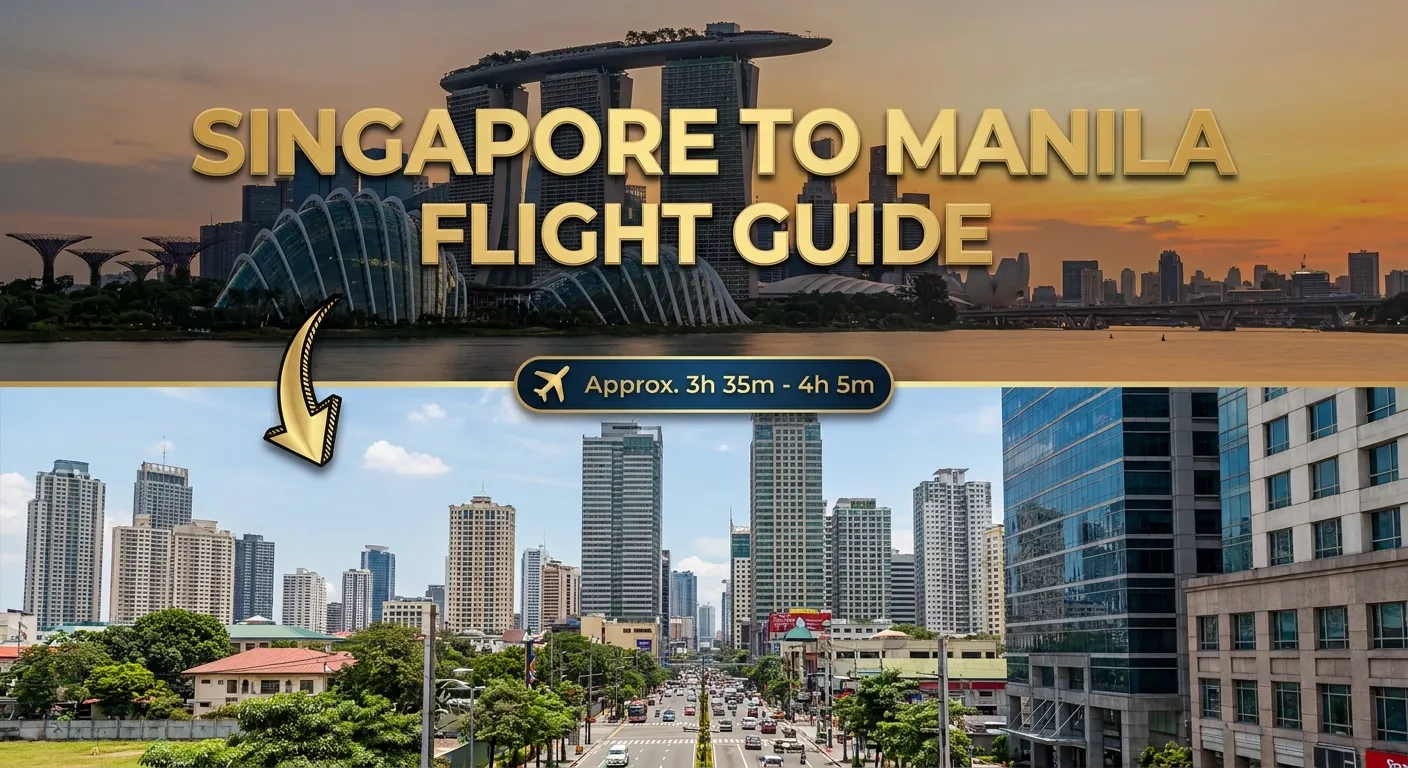
    Singapore and Manila sit about 2,386 km apart, and a nonstop flight between them takes just under four hours. This Singapore to Manila flight guide is for anyone planning the trip in late 2026 or early 2027. It covers the airlines on the route, flight times, the cheapest months, and the eTravel form every visitor needs.

    You will also find the best ways from the airport to Makati and the rest of the city, with prices in pesos and Singapore dollars. We checked fares, schedules, and entry rules in October 2026, so please confirm the details again before you pay. Manila’s airport has also moved some airlines to new terminals this year, and we explain what that means for you.

    Four airlines fly nonstop from Singapore to Manila: Singapore Airlines, Philippine Airlines, Scoot, and Cebu Pacific. The flight takes about 3 hours 35 minutes to 4 hours 5 minutes, and there is no time difference between the two cities. Singaporeans can visit the Philippines without a visa for 30 days. Kayak data shows September as the cheapest month, with return fares averaging about S$206.

    Direct Flights from Singapore to Manila in 2026

    Singapore Airlines runs the most direct flights from Singapore to Manila, with five departures every day. Philippine Airlines adds close to four daily flights, and two budget airlines fill in the rest. In total, about 87 nonstop flights a week leave Changi Airport for Ninoy Aquino International Airport (MNL).

    The table below shows how often each airline flies the route, based on schedules updated on 5 October 2026:

    AirlineType of AirlineNonstop Flights per Week
    Singapore AirlinesFull-service35
    Philippine AirlinesFull-service26
    ScootLow-costUp to 14
    Cebu PacificLow-cost12

    One name has dropped off this list since last year. Jetstar Asia stopped flying in July 2025, so older travel sites that still show its Manila fares are out of date.

    Every Singapore to Manila flight guide should point out the terminals at both ends. At Changi, Singapore Airlines and Philippine Airlines leave from Terminal 2, Scoot uses Terminal 1, and Cebu Pacific flies from Terminal 4. In Manila, Philippine Airlines lands at Terminal 1, while the other three airlines use Terminal 3.

    Those Manila terminals can change, so do not rely on an old trip. The airport’s new private operator, New NAIA Infra Corp, moved some airlines between Terminals 1 and 3 in March and April 2026. More changes may follow, so check the terminal on your booking the day before you fly home.

    Changi also has direct flights to Clark International Airport, about 80 km north of Manila. Clark fares are sometimes cheaper, but the long drive south takes two hours or more. It only makes sense if you plan to visit the north of Luzon.

    How to Plan Your Trip with This Singapore to Manila Flight Guide

    A smooth trip comes down to five choices: flight time, booking date, entry papers, airport transfer, and airline. The sections below cover each one in turn, with real prices and times. Use this Singapore to Manila flight guide as a simple plan, and start with the clock.

    Singapore to Manila Flight Time and Time Difference

    The nonstop Singapore to Manila flight time is about 3 hours 35 minutes to 4 hours 5 minutes. Most flights land after close to 3 hours 50 minutes in the air. The trip home is a little quicker, at around 3 hours 30 minutes to 4 hours, depending on the winds.

    There is no time difference between the two cities, because both run on GMT+8 all year. That makes planning easy, and you won’t need to reset your body clock. A Singapore Airlines flight that leaves Changi at 7:45 am lands in Manila at about 11:35 am, in time for lunch.

    Departures run from just after midnight to about 9 pm, so you can pick almost any time of day. The red-eye flights from Philippine Airlines, Cebu Pacific, and Scoot land in Manila between about 4:45 am and 6 am. They suit people who want a full first day. You may wait a few hours before you can check in at your hotel, though.

    When to Book Cheap Flights from Singapore to Manila

    September is usually the cheapest month to fly, with return fares averaging about S$206 on Kayak. Kayak’s data also shows Thursday as the cheapest day to fly out and Sunday as the priciest. Google Flights points to January instead, so treat both months as a rough guide.

    Fares climb sharply in December, when many Filipinos in Singapore fly home for Christmas. Holy Week in late March or early April is also busy, since much of the country takes a long break. Book at least two months ahead if you must travel during either period.

    Weather matters as much as price on this route. The dry season runs from December to May. Days feel cooler from December to February and hot from March to May. The rainy season lasts from June to October, and storms can delay or cancel flights from July to September. The cheap September fares come with that risk, so leave some room in your plans.

    Set a fare alert on two or three booking sites, then watch prices for a few weeks before you pay. Booking with the airline itself also makes date changes easier if your plans move.

    Philippines Entry Rules and eTravel for Singaporeans

    Singapore citizens can visit the Philippines without a visa for up to 30 days. Your passport should be valid for at least six months, and you need a return or onward ticket. Every visitor must also fill in the free eTravel form within 72 hours before arrival:

    1. Open the official eTravel website or the eGovPH app within 72 hours of landing.
    2. Enter your passport details, flight number, and Manila hotel address.
    3. Answer the short health questions and submit the form.
    4. Save the QR code on your phone, and take a screenshot for backup.
    5. Show the QR code to airline staff at Changi and to immigration in Manila.

    This part of any Singapore to Manila flight guide trips people up the most, because fake sites charge for the same free form. Any site asking for payment is not the real one, so close it and use etravel.gov.ph instead. Some travellers are also asked for eTravel when leaving the Philippines, so check the site before your flight home.

    If you live in Singapore on another passport, the rules may differ. Indian citizens, for example, usually get only 14 days without a visa. Those who hold a valid Singapore visa or PR can get 30 days instead.

    Getting from Manila Airport to the City

    Grab is the easiest way from Manila’s airport to the city, because Manila still has no airport train. A Grab car to Makati usually costs PHP 300 to PHP 600, or about S6toS12. The fare shows in the app before you book, so there is nothing to argue about.

    The yellow airport taxis are a good backup if your phone has no data. They run on the meter and cost roughly PHP 250 to PHP 550 to Makati. Use only the official taxi queue in the arrivals area. Ignore anyone who walks up and offers you a ride in the hall.

    The UBE Express airport bus is the cheapest choice at PHP 150 to PHP 200, but it leaves only from Terminal 3. Its routes no longer stop in Makati or BGC, so most visitors still need a taxi after the bus. It works best for travellers heading to Ermita, Cubao, or the PITX terminal.

    Traffic is the real cost of any ride in Manila, so plan for it. The road trip is short on a map but slow in real life. The drive to Makati takes 30 to 60 minutes outside rush hour, but it can pass 90 minutes on a weekday evening. If you land between 5 pm and 8 pm, plan a quiet first night and a short trip to your hotel.

    Full-Service or Budget: Which Airline to Choose

    All four airlines fly the same four-hour route, but the trip feels quite different on each one. Here is how they compare on the things most travellers care about:

    • Singapore Airlines has the most daily flights and earns KrisFlyer miles.
    • Philippine Airlines flies four times a day and suits oneworld members.
    • Cebu Pacific often has the lowest fares and many flights to other Philippine cities.
    • Scoot is a cheap choice, but bags, meals, and seats cost extra.

    On a four-hour trip, a budget fare makes sense if you travel light. Families with suitcases should price a full-service ticket too. The gap often shrinks once you add bags to a budget fare.

    Singapore to Manila Flight Guide Checklist Before You Fly

    Run through this list two days before you leave for Changi. A missing QR code at the check-in counter causes far more stress than a heavy bag does:

    • Make sure your passport is valid for at least six months from your travel date.
    • Fill in your eTravel form within 72 hours before you land.
    • Save your return ticket offline, since airline staff may ask to see it.
    • Confirm your Changi terminal, since airlines on this route use three of them.
    • Pack a plug adapter, because the Philippines uses flat two-pin Type A and B sockets.
    • Download the Grab app and link a card before you leave home.
    • Bring a light rain jacket if you travel between June and October.

    At about PHP 49 per Singapore dollar in September 2026, S$100 buys roughly PHP 4,900. Malls and hotels take cards, but carry small peso notes for taxis, tips, and street food.

    Frequently Asked Questions

    Which airline is best for a Singapore to Manila flight?

    Our pick in this Singapore to Manila flight guide is Singapore Airlines, because it runs five daily flights and includes a meal and a bag. Our second choice is Philippine Airlines, which works well if you connect to other Philippine cities. Cebu Pacific is the best budget pick for travellers who pack light.

    How far is Manila from Singapore by plane?

    The flight distance between Singapore and Manila is about 2,386 km, or roughly 1,483 miles. That makes it a short-haul trip, a little shorter than the flight to Hong Kong. Most nonstop flights take just under four hours, so a morning departure gets you to Manila by lunchtime.

    Can I fly on from Manila to Cebu or Boracay?

    Yes, both Philippine Airlines and Cebu Pacific sell onward domestic flights from Manila. Book the whole trip on one ticket where you can, so the airline rebooks you if your first flight runs late. Allow at least three hours for a connection, since you may need to change terminals.

    Is it safe to take a taxi from Manila airport?

    Taxis from the official queue are safe for most visitors, and the yellow airport taxis use the meter. Trouble usually starts with drivers who walk up to you in the terminal and quote a fixed price. Book through the Grab app or join the official queue, and keep your bags in sight.

    What changes should travellers watch for after October 2026?

    Manila’s airport is still moving airlines between terminals, so check your booking before every flight. Fares also rise from late November as the Christmas season begins. We will update this Singapore to Manila flight guide when schedules, terminals, or entry rules change.

    Conclusion

    For most people, the best Singapore to Manila flight is a morning nonstop on Singapore Airlines or Philippine Airlines. You land before lunch, take a Grab to Makati, and lose no time to jet lag. Budget travellers should price Cebu Pacific or Scoot with a checked bag added.

    Use this Singapore to Manila flight guide to sort out three things before you pay: your eTravel QR code, your terminal, and a fare alert. If your dates can move, watch September fares on Kayak. Bookmark this Singapore to Manila flight guide too, because we update it when airlines or terminals change.
  • Singapore to Melbourne Flight Guide for 2026

    Singapore to Melbourne Flight Guide for 2026

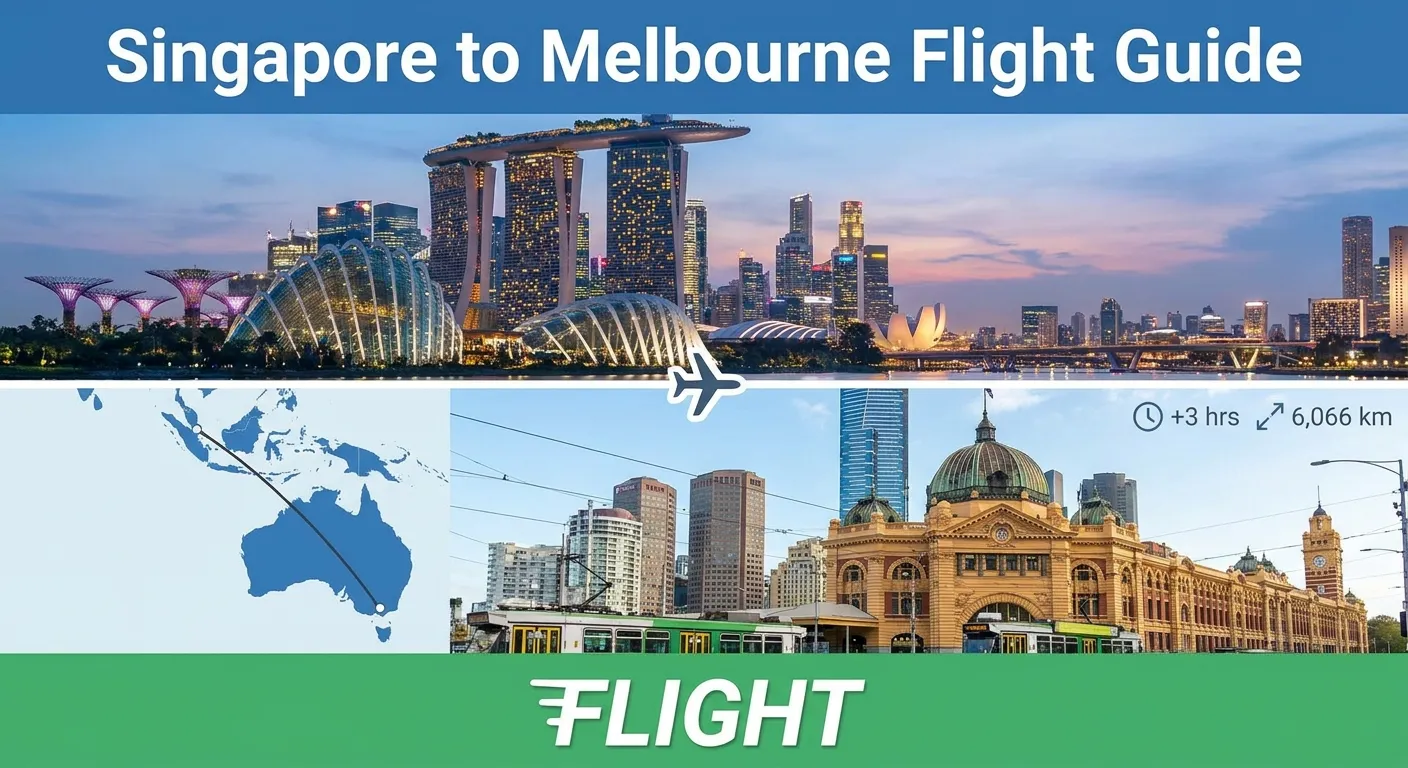
    Singapore and Melbourne sit about 6,066 km apart, and a nonstop flight between them takes a little over seven hours. This Singapore to Melbourne flight guide is for anyone planning the trip in late 2026 or early 2027. It covers the airlines on the route, flight times, the cheapest months, and the Australian ETA.

    You will also find the best ways from Melbourne Airport into the city, with prices in both Australian and Singapore dollars. We checked fares, schedules, and entry rules in October 2026, so please confirm the details again before you pay. One detail catches many travellers out, and it is the clock: Melbourne moves three hours ahead of Singapore from October.

    Five airlines fly nonstop from Singapore to Melbourne: Singapore Airlines, Qantas, Scoot, Jetstar, and Turkish Airlines. The flight takes about 7 hours 15 minutes, and Melbourne is two or three hours ahead, depending on the season. Singaporeans need an Australian ETA before boarding, which costs AUD 20. Kayak data shows May as the cheapest month to fly.

    Direct Flights from Singapore to Melbourne in 2026

    Singapore Airlines runs the most direct flights from Singapore to Melbourne, with five departures every day. Qantas adds two daily flights, and three more airlines fill in the rest of the week. In total, about 68 nonstop flights a week leave Changi Airport for Melbourne Airport (MEL).

    The table below shows how often each airline flies the route, based on schedules updated on 5 October 2026:

    AirlineType of AirlineNonstop Flights per Week
    Singapore AirlinesFull-service35
    QantasFull-service14
    ScootLow-costUp to 12
    JetstarLow-cost4
    Turkish AirlinesFull-service3

    Turkish Airlines is the surprise name on this list. Its flight from Istanbul stops in Singapore, then carries on to Melbourne with seats for sale on that leg. It leaves Changi at about 10:25 am three times a week, on a modern Airbus A350.

    Singapore Airlines also sends some of its largest planes on this route. Its Melbourne flights use the Airbus A380, the Boeing 777-300ER, and the Airbus A350. If you want a premium cabin, the national airline gives you the widest choice of seats and times.

    One-stop tickets through Kuala Lumpur, Jakarta, or Bali sometimes cost less during peak weeks. These trips often add four hours or more, so they only make sense when nonstop fares jump. Always book the whole route on one ticket, so the airline rebooks you if a flight runs late.

    Every Singapore to Melbourne flight guide should also point out the terminals at Changi. Singapore Airlines leaves from Terminal 3, Jetstar uses Terminal 2, and Qantas, Scoot, and Turkish Airlines depart from Terminal 1. All five airlines land at Terminal 2 in Melbourne, which is the international terminal.

    How to Plan Your Trip with This Singapore to Melbourne Flight Guide

    A smooth trip comes down to five choices: flight time, booking date, entry papers, airport transfer, and airline. The sections below cover each one in turn, with real prices and times. Use this Singapore to Melbourne flight guide as a simple plan, and start with the clock.

    Singapore to Melbourne Flight Time and Time Difference

    The nonstop Singapore to Melbourne flight time is about 7 hours to 7 hours 30 minutes. Most flights land after roughly 7 hours 15 minutes in the air. The trip home usually takes longer, at close to 8 hours, because planes heading north and west face stronger headwinds.

    The time difference changes twice a year, since Victoria uses daylight saving time. From 4 October 2026 to 4 April 2027, Melbourne is three hours ahead of Singapore. For the rest of the year, the gap drops to two hours. Your plane lands at Terminal 2, the international terminal at Tullamarine, about 23 km northwest of the city centre.

    That extra hour changes your arrival time more than you might think. A Singapore Airlines flight that leaves Changi at 9:55 pm lands in Melbourne at about 8:10 am local time. A morning flight at 7:45 am reaches Melbourne around 6 pm, just in time for dinner.

    Overnight flights suit people who can sleep sitting up, and they save you a night in a hotel. Pick a window seat to rest, or an aisle seat if you get up often during a long flight.

    When to Book Cheap Flights from Singapore to Melbourne

    May is usually the cheapest month to fly, with return fares averaging about S$453 on Kayak. Kayak’s data also shows Monday as the cheapest day to fly out and Tuesday as the priciest. Recent one-way deals on the route have dipped to around S$180.

    Fares climb sharply in December and January, when Singapore school holidays meet Melbourne’s summer. The Australian Open in January and the Melbourne Cup on 3 November 2026 also fill flights and hotels. Book at least two to three months ahead if you must travel during these weeks.

    Weather matters as much as price on this trip. Melbourne summers from December to February bring warm days, though some afternoons pass 35°C. Winter from June to August is cool and grey, with daytime highs of only 13°C to 15°C. March to May is mild, and it lines up nicely with the cheap May fares.

    Set a fare alert on two or three booking sites, then watch prices for a few weeks before you pay. Booking with the airline itself also makes date changes easier if your plans move.

    Australian ETA for Singaporeans

    Singapore passport holders need an Electronic Travel Authority, subclass 601, before they board. There is no visa fee, only an AUD 20 service charge, or about S$18. You can only apply through the official AustralianETA app, in five short steps:

    1. Download the AustralianETA app from the App Store or Google Play.
    2. Scan the photo page and chip of your passport with your phone.
    3. Take a live selfie and answer the questions about your trip and health.
    4. Pay the AUD 20 service charge by card, Apple Pay, or Google Pay.
    5. Wait for the approval email, which usually arrives within 12 hours.

    The ETA stays valid for 12 months and allows stays of up to three months each time. It is linked to your passport, so you must apply again if you renew it. This part of any Singapore to Melbourne flight guide matters most, because airlines will not let you board without it.

    Skip third-party websites, since some charge several times the official fee for the same approval. If you live in Singapore on another passport, check the rules for your own country. Indian and Filipino citizens, for example, usually need a Visitor visa, subclass 600, which takes longer to process.

    Getting from Melbourne Airport to the City

    The SkyBus is the simplest way from Melbourne Airport to the city, because Melbourne still has no airport train. The red express bus runs to Southern Cross Station in about 30 minutes in normal traffic. It runs around the clock, so a late landing is never a problem.

    A rail line to the airport is being built, but the work is still in its early stages. Until it opens, a bus, taxi, or rideshare is the only way into town. Plan for that before you land, especially if you arrive at rush hour. A one-way adult ticket costs AUD 25.90, or about S$23.

    Budget travellers can save a lot by using regular public transport instead. Take bus 901 from the airport to Broadmeadows Station, then catch a train into the city. The whole trip costs about AUD 5.70 with a Myki card, though it takes close to an hour.

    A taxi or rideshare to the city takes 25 to 40 minutes, depending on traffic. It makes more sense for families with heavy bags, since four SkyBus tickets cost more than one car. From Southern Cross Station, trams run across the city centre, and rides inside the Free Tram Zone cost nothing.

    Full-Service or Budget: Which Airline to Choose

    All five airlines fly the same seven-hour route, but the trip feels quite different on each one. Here is how they compare on the things most travellers care about:

    • Singapore Airlines has the most daily flights and earns KrisFlyer miles.
    • Qantas flies twice each evening and suits oneworld members.
    • Turkish Airlines flies a newer Airbus A350, but only three times a week.
    • Scoot is the cheapest choice, but bags, meals, and seats cost extra.
    • Jetstar flies a Boeing 787 four nights a week and also charges for extras.

    On a flight longer than seven hours, a meal and a checked bag are worth paying for. Full-service fares include both, so the price gap often shrinks once you add extras to a budget ticket.

    Singapore to Melbourne Flight Guide Checklist Before You Fly

    Run through this list two days before you leave for Changi. A missing approval at the check-in counter causes far more stress than a heavy bag does:

    • Make sure your ETA is approved and linked to the passport you will carry.
    • Confirm your Changi terminal, since airlines on this route use three of them.
    • Pack a plug adapter, because Australia uses the angled Type I socket.
    • Declare all food, plants, and animal products on arrival, as fines are steep.
    • Bring a warm layer, since Melbourne weather can change within a single day.
    • Buy an Australian eSIM or turn on data roaming before you board.
    • Get a Myki card at the airport if you plan to ride trams and trains.

    At about S0.90perAustraliandollarinSeptember2026,S100 buys roughly AUD 110. Most shops, cafes, and taxis in Melbourne take cards, so you only need a little cash. Australia also charges a 10% GST, which is already included in the price you see on shop tags.

    Frequently Asked Questions

    Which airline is best for a Singapore to Melbourne flight?

    Our pick in this Singapore to Melbourne flight guide is Singapore Airlines, because it runs five daily flights and includes meals and bags. Our second choice is Qantas, which works well for oneworld members. Scoot is the best budget pick if you travel light with only a cabin bag.

    How far is Melbourne from Singapore by plane?

    The flight distance between Singapore and Melbourne is about 6,066 km, or roughly 3,770 miles. That makes it a little shorter than the trip to Sydney, which runs about 6,300 km. Most nonstop flights take just over seven hours, so an overnight departure gets you there by breakfast.

    Can I use SmartGates when I land in Melbourne?

    Singapore citizens with an electronic passport can usually use the SmartGates at Melbourne Airport. These kiosks scan your passport and face, which is often faster than the staffed desks. Families with young children may need to join the staffed lanes, since the gates have age limits.

    How early should I get to Changi for a Melbourne flight?

    Aim to reach Changi about two and a half hours before your Melbourne flight departs. That leaves time for bag drop and passport control on a long international trip. Scoot opens its counters three hours before its Boeing 787 flights, so budget travellers with checked bags can arrive earlier and skip the queue.

    What changes should travellers watch for after October 2026?

    Daylight saving started in Melbourne on 4 October 2026, so the time gap is now three hours. It returns to two hours on 4 April 2027. Fares also rise for the Melbourne Cup and the summer holidays. We will update this Singapore to Melbourne flight guide when schedules or fees change.

    Conclusion

    For most people, the best Singapore to Melbourne flight is an overnight nonstop on Singapore Airlines or Qantas. You land around breakfast, ride the SkyBus to Southern Cross in about 30 minutes, and lose two or three hours to the clock. Budget travellers should price Scoot or Jetstar with a checked bag added.

    Use this Singapore to Melbourne flight guide to sort out three things before you pay: your ETA, your Changi terminal, and a fare alert. If your dates can move, watch May fares on Kayak. Bookmark this Singapore to Melbourne flight guide too, because we update it when airlines change their schedules.

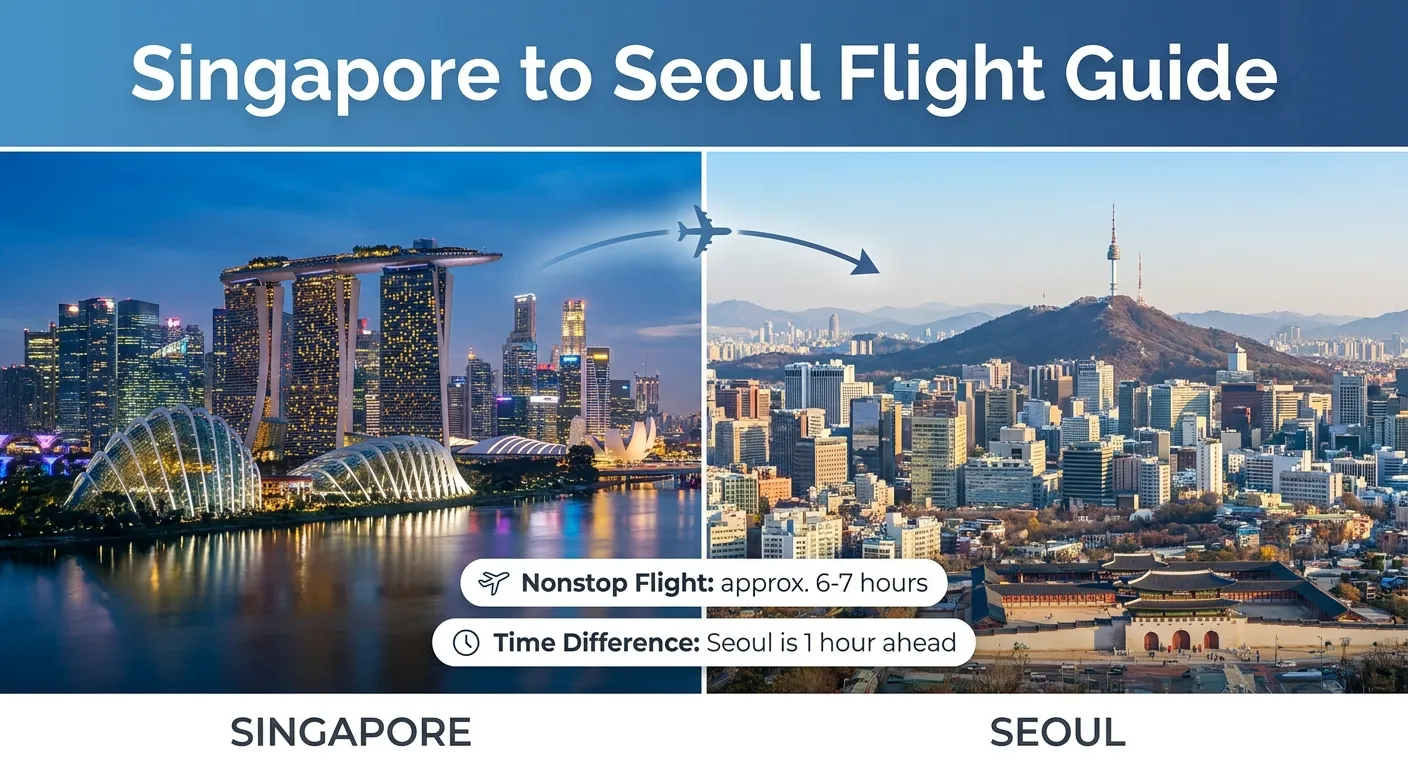
  • Singapore to Seoul Flight Guide for 2026

    Singapore to Seoul Flight Guide for 2026

    Singapore and Seoul sit about 4,650 km apart, and a nonstop flight between them takes a little over six hours. This Singapore to Seoul flight guide is for anyone planning the trip in late 2026 or early 2027. It covers the airlines on the route, flight times, the cheapest months, and the entry rules for Singaporeans.

    You will also find the fastest ways from Incheon Airport into the city, with prices in Singapore dollars. We checked fares, schedules, and entry rules in October 2026, so please confirm the details again before you pay. Three big changes also land in December 2026, and we explain each one below.

    Six airlines fly nonstop from Singapore to Seoul: Singapore Airlines, Korean Air, Asiana Airlines, Trinity Airways, Jeju Air, and Scoot. The flight takes about 6 hours 10 minutes to 6 hours 50 minutes, and Seoul is one hour ahead of Singapore. Singaporeans can visit Korea without a visa for up to 90 days, and Kayak data shows February as the cheapest month.

    Direct Flights from Singapore to Seoul in 2026

    Singapore Airlines runs the most direct flights from Singapore to Seoul, with four departures every day. Next comes Korean Air with three flights a day, and four smaller airlines fill in the rest. In total, about 72 nonstop flights a week leave Changi Airport for Incheon International Airport (ICN).

    The table below shows how often each airline flies the route, based on schedules updated on 5 October 2026:

    AirlineType of AirlineNonstop Flights per Week
    Singapore AirlinesFull-service28
    Korean AirFull-service21
    Asiana AirlinesFull-service7
    Trinity AirwaysLow-cost7
    Jeju AirLow-costAbout 5
    ScootLow-costAbout 3

    Trinity Airways is the new name for T’way Air, a Korean budget airline. It switched to the new brand on 10 September 2026, but it still uses the flight code TW. Some booking sites may still show the old name for the same 11 pm flight.

    One-stop tickets can cost less in busy months, though they take much longer. Vietnam Airlines, for example, sells trips through Hanoi or Ho Chi Minh City. These often run nine hours or more, so they suit travellers with time to spare.

    Asiana will also disappear as a separate brand very soon. Korean Air plans to absorb it fully on 17 December 2026, so later Asiana flights will carry Korean Air flight numbers. If you hold Asiana Club miles, plan to use them before mid-December.

    Every Singapore to Seoul flight guide should also point out the terminals at both ends. At Changi, Scoot uses Terminal 1, Singapore Airlines uses Terminal 2, and Korean Air and Jeju Air leave from Terminal 4. In Seoul, Korean Air and Asiana land at Incheon Terminal 2, while the other four airlines use Terminal 1.

    How to Plan Your Trip with This Singapore to Seoul Flight Guide

    A smooth trip comes down to five choices: flight time, booking date, entry papers, airport transfer, and airline. The sections below cover each one in turn, with real prices and times. Use this Singapore to Seoul flight guide as a simple plan, and start with the clock.

    Singapore to Seoul Flight Time and Time Difference

    The nonstop Singapore to Seoul flight time is about 6 hours 10 minutes to 6 hours 50 minutes. Jeju Air flies a smaller Boeing 737 MAX, so its trip usually sits at the slower end of that range. The flight back to Singapore takes a little longer, at around 6 hours 40 minutes on average.

    Seoul runs one hour ahead of Singapore all year, since Korea does not use daylight saving time. A Singapore Airlines flight that leaves Changi at 8:30 am lands in Seoul at about 3:50 pm local time. You lose only one hour on the clock, so jet lag is rarely a problem.

    Most departures leave Changi either in the morning or between 10 pm and 3 am. The late flights reach Seoul between about 6 am and 10 am, which gives you a full first day in the city. Light sleepers may prefer a morning flight, which lands in time for an early dinner. On a flight this long, pick a window seat to sleep or an aisle seat if you get up often.

    When to Book Cheap Flights from Singapore to Seoul

    February is usually the cheapest month to fly, with return fares averaging about S$496 on Kayak. Cheapflights points to July instead, so treat both months as a rough guide. On its own site, Korean Air listed economy return fares from about S$558 for late 2026.

    Budget airlines can cut that price a lot on sale dates. Google Flights recently showed Jeju Air one-way fares from about S$176, the lowest on the route. These fares rarely include a checked bag, so add a suitcase before you compare totals.

    Set a fare alert on two or three booking sites, then watch prices for a few weeks. School holidays in June and December push fares up, so book early for those weeks. Booking with the airline itself also makes date changes easier if your plans move.

    The time of year matters as much as the fare you pay. Cherry blossoms usually peak in early April, and autumn leaves turn red from late October to mid-November. Both periods sell out fast, so book at least two months ahead if you want to see them. Winter days in January often stay below freezing, while late June and July bring the rainy season.

    Korea Entry Rules for Singaporeans

    Singapore citizens can visit South Korea without a visa for up to 90 days. The Korean Embassy in Singapore confirms that Singaporeans do not need a K-ETA until 31 December 2026. You still need the free e-Arrival Card, which takes about ten minutes to fill in:

    1. Open the official e-Arrival Card website within 72 hours before you land.
    2. Enter your passport details, flight number, and Seoul hotel address.
    3. Answer the short questions about your trip and submit the form.
    4. Save the confirmation on your phone, in case an officer asks to see it.

    This part of any Singapore to Seoul flight guide changes the fastest, so check it again before you fly. The K-ETA waiver ends on 31 December 2026 unless Korea extends it once more. From 1 January 2027, you may need a K-ETA before boarding, which costs about S$9.

    Apply only on the official K-ETA website, because fake agents charge far more for the same form. Singapore citizens aged 17 and above can also use the Smart Entry Service gates at Incheon, according to Mainly Miles. If you live in Singapore on another passport, check the rules for your own country.

    Getting from Incheon Airport to Seoul

    The AREX Express train is the fastest way into the city, and it never gets stuck in traffic. It reaches Seoul Station in 43 minutes from Terminal 1 and 51 minutes from Terminal 2. A one-way adult ticket costs KRW 13,000 at the station, or about S$12.

    The AREX All-Stop train is cheaper and leaves every few minutes from both terminals. It takes about an hour to Seoul Station and stops at Hongik University Station, which suits anyone staying in Hongdae. You can pay with a T-money card, sold at the convenience stores in the arrivals hall.

    Late arrivals need a backup plan for the ride into town. The first express train leaves Terminal 2 at about 5:15 am, and the last one leaves before 11 pm. After that, night buses and taxis take over.

    Airport buses are a good choice if your hotel is far from a train line. They run to most big areas of Seoul, such as Gangnam, Myeongdong, and Jamsil. The ride takes longer in traffic, but the bus drops you much closer to your door. A taxi to central Seoul adds a road toll on top of the meter, so the fare costs more than you might expect.

    Full-Service or Budget: Which Airline to Choose

    All six airlines fly the same six-hour route, but the trip feels quite different on each one. Here is how they compare on the things most travellers care about:

    • Singapore Airlines has the most daily flights and earns KrisFlyer miles.
    • Korean Air flies three times a day and suits SkyTeam members.
    • Asiana suits Star Alliance members until it joins Korean Air in December.
    • Trinity Airways flies an Airbus A330, which feels roomier than most budget jets.
    • Jeju Air often has the lowest base fares but flies a narrower Boeing 737.
    • Scoot flies a Boeing 787, though only two or three times a week.

    For a six-hour overnight flight, a meal and a checked bag are worth paying for. Full-service fares include both, so the price gap often shrinks once you add extras to a budget ticket.

    Singapore to Seoul Flight Guide Checklist Before You Fly

    Run through this list two days before you leave for Changi. A missing form at the check-in counter causes far more stress than a heavy bag does:

    • Make sure your passport is valid for at least six months from your travel date.
    • Submit your e-Arrival Card within 72 hours before you land.
    • Confirm your Changi terminal, since airlines on this route use all four.
    • Pack a plug adapter, because Korea uses two-pin Type C and Type F sockets.
    • Download Naver Map or KakaoMap, as Google Maps gives limited directions in Korea.
    • Buy a Korean eSIM or turn on data roaming before you board.
    • Bring a warm jacket from November to March, when Seoul often drops below 0°C.
    • Change a small amount of cash into Korean won for street food stalls.

    At about KRW 1,080 per Singapore dollar in September 2026, S$100 buys roughly KRW 108,000. Most shops, cafes, and taxis in Seoul take cards, so you only need a little cash.

    Frequently Asked Questions

    Which airline is best for a Singapore to Seoul flight?

    Our pick in this Singapore to Seoul flight guide is Singapore Airlines, because it runs four daily flights and includes a meal in every fare. Our second choice is Korean Air, which works well for SkyTeam members. Trinity Airways is the best budget choice, since its larger A330 makes an overnight flight easier.

    How far is Seoul from Singapore by plane?

    The flight distance between Singapore and Seoul is about 4,650 km, or roughly 2,890 miles. That makes it a medium-haul trip, much longer than a flight to Hong Kong or Bangkok. Most nonstop flights take just over six hours, so an overnight departure gets you to Seoul by breakfast.

    Can I fly from Singapore to Gimpo Airport instead of Incheon?

    No nonstop flights currently run from Changi to Gimpo Airport, so every direct flight lands at Incheon. Some one-stop tickets do reach Gimpo, which sits closer to central Seoul. These trips usually take much longer, so they rarely make sense unless the fare is far lower.

    Do Singapore residents on other passports need a Korean visa?

    It depends on your passport, not on where you live. Australians and many Europeans can enter Korea without a visa, while Malaysians may need a K-ETA before they fly. Indian citizens usually need a full visa in advance. Check the Korean Embassy website with your exact passport before you book anything.

    What changes should travellers watch for after October 2026?

    Three changes arrive before the new year. Asiana becomes part of Korean Air on 17 December, and the K-ETA waiver for Singaporeans ends on 31 December unless extended. T’way Air also now flies as Trinity Airways. We will update this Singapore to Seoul flight guide as each change takes effect.

    Conclusion

    For most people, the best Singapore to Seoul flight is an overnight nonstop on Singapore Airlines or Korean Air. You land around breakfast, ride the AREX Express to Seoul Station in 43 minutes, and lose only one hour to the time difference. Budget travellers should price Trinity Airways or Jeju Air with a checked bag added.

    Use this Singapore to Seoul flight guide to sort out three things before you pay: your e-Arrival Card, your Changi terminal, and a fare alert. If your dates can move, watch February fares on Kayak. Trips in 2027 may also need a K-ETA, so bookmark this Singapore to Seoul flight guide and check back before you book.

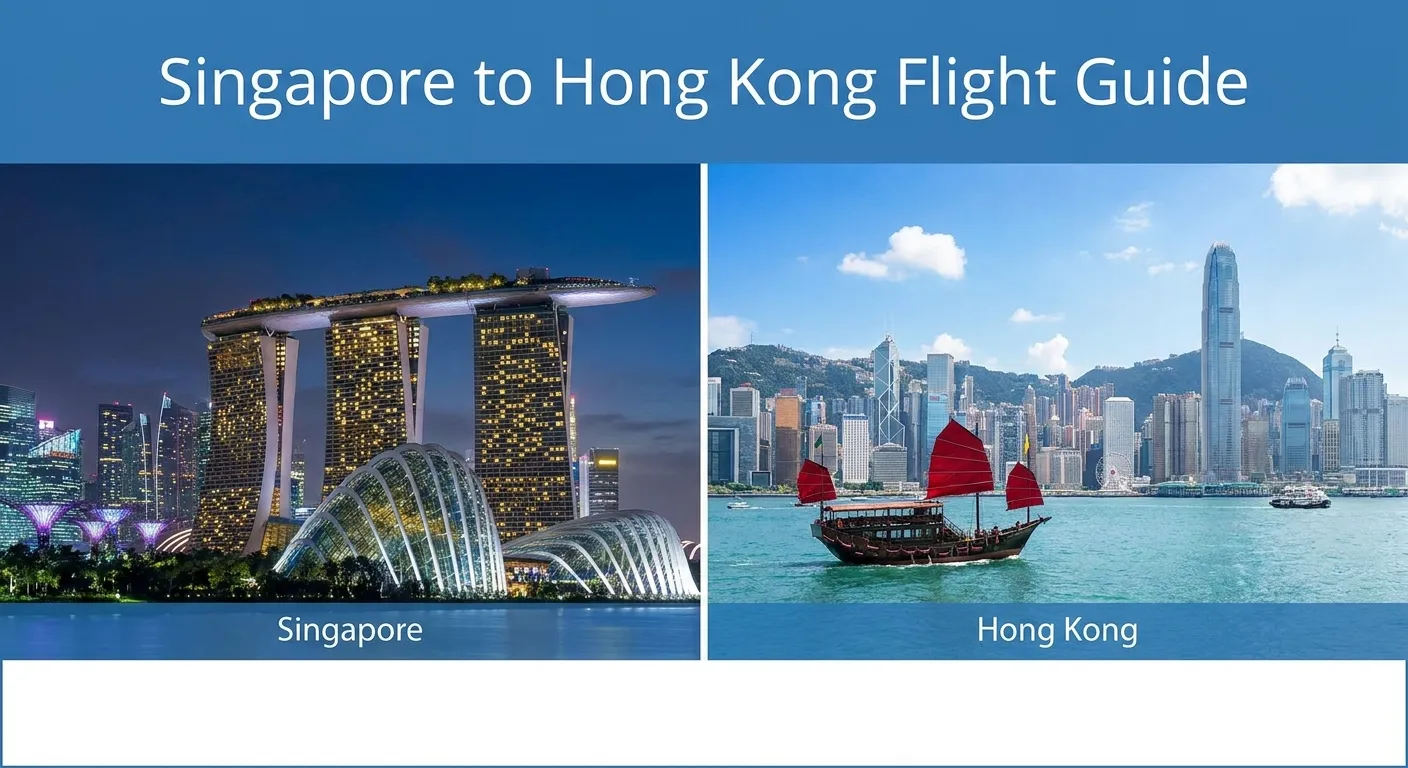
  • Singapore to Hong Kong Flight Guide for 2026

    Singapore to Hong Kong Flight Guide for 2026

    Singapore and Hong Kong sit about 2,600 km apart, and a nonstop flight between them takes around four hours. This Singapore to Hong Kong flight guide is for anyone planning the trip in late 2026 or early 2027. It covers the airlines that fly the route, the best time to book, and the rules for entering Hong Kong.

    You will also find the quickest and cheapest ways to get from Hong Kong airport into the city. Every price is shown in Singapore dollars. We checked the fares, schedules, and entry rules in October 2026, so please confirm the details again before you pay.

    Three airlines fly nonstop from Singapore to Hong Kong: Cathay Pacific, Singapore Airlines, and Scoot. The flight takes about 3 hours 45 minutes to 4 hours, and there is no time difference between the two cities. Singapore citizens can visit Hong Kong without a visa for up to 90 days. Return fares are usually lowest in September, when they average about S$303 on Kayak.

    Direct Flights from Singapore to Hong Kong in 2026

    Cathay Pacific runs the most nonstop flights on this route, followed by Singapore Airlines. Scoot, the budget arm of Singapore Airlines, flies the route a few times a week. Between them, you can usually choose from more than ten departures a day.

    The table below shows how often each airline flies from Changi to Hong Kong International Airport, based on schedules published for 2026:

    AirlineType of AirlineNonstop Flights per Week
    Cathay PacificFull-serviceAbout 56
    Singapore AirlinesFull-serviceAbout 35
    ScootLow-costAbout 4

    Every Singapore to Hong Kong flight guide should point out that Changi uses different terminals for each airline. Cathay Pacific leaves from Terminal 4, Singapore Airlines uses Terminal 2 or 3, and Scoot flies from Terminal 1. Check your booking the day before you fly, because terminal changes do happen.

    Fares on this route are often lower than people expect for a four-hour flight. On its own website, Cathay Pacific lists economy return fares from about S$297. On Kayak, a quarter of travellers found return tickets for S$330 or less.

    Your choice of airline also decides which miles you earn. Cathay Pacific is part of the oneworld alliance, so you can earn Asia Miles or British Airways Avios on the flight. Singapore Airlines and Scoot are better for KrisFlyer members, since both earn miles in the same programme.

    How to Plan Your Trip with This Singapore to Hong Kong Flight Guide

    A good trip comes down to five choices: the flight time, the booking date, your entry papers, the airport transfer, and the airline. The sections below cover each one in turn, with real prices and times. Use this Singapore to Hong Kong flight guide as a simple plan, and start with the flight time.

    Singapore to Hong Kong Flight Time and Time Difference

    The nonstop Singapore to Hong Kong flight time is about 3 hours 45 minutes to 4 hours 5 minutes. The exact time depends on the airline, the aircraft, and the winds on the day. The return trip to Singapore is usually a few minutes shorter than the flight out.

    There is no time difference between the two cities, since both run on GMT+8 all year. That makes planning easy, and you won’t need to reset your body clock. A flight that leaves Changi at 9 am lands in Hong Kong around 1 pm local time. You still have the whole afternoon ahead of you.

    Your flight lands at Hong Kong International Airport on Lantau Island, about 40 km west of Central. Flights from Singapore usually arrive at Terminal 1, where immigration, baggage claim, and the Airport Express platform are all close together.

    When to Book Cheap Flights from Singapore to Hong Kong

    September is usually the cheapest month to fly, with return fares averaging about S$303 on Kayak. On Kayak’s data, Monday is usually the cheapest day of the week to fly out. Fares climb during school holidays, Chinese New Year, and the Christmas period, so book early if you must travel then.

    Weather matters as much as price on this route, because Hong Kong’s typhoon season runs mainly from July to September. A strong storm signal can delay or cancel flights for a day or more. October to December brings cooler, drier weather, and many travellers think it is the best time to visit.

    Set a fare alert on two or three booking sites, then watch prices for a few weeks. Booking directly with the airline also makes changes easier if your plans move.

    Always read the fare rules before you compare prices between airlines. The cheapest economy fares often leave out checked bags or charge a fee to change dates. A fare that looks S$40 cheaper can end up costing more once you add a suitcase.

    Hong Kong Entry Rules for Singaporeans

    Singapore citizens can visit Hong Kong without a visa for up to 90 days. Hong Kong also scrapped its paper arrival card in October 2024, so there is no form to fill in on the plane. You simply show your passport at immigration, and the officer gives you a landing slip.

    Frequent visitors can also join e-Channel, the self-service gates at Hong Kong immigration. Since February 2026, the rules have been much simpler, and enrolment works like this:

    1. Make sure you have entered Hong Kong through the airport at least twice in the past 24 months.
    2. Visit an e-Channel enrolment office with the passport you used to enter.
    3. Have your photo taken and sign the consent form.
    4. Use the automated lanes on your next arrival and departure.

    It is free, and it only takes a few minutes. If you hold a passport from another country, check your own entry rules before you book. Indian citizens, for example, must complete a free pre-arrival registration online before they fly. A visit to Hong Kong also does not let you cross into mainland China, which has its own entry rules.

    Getting from Hong Kong Airport to the City

    The Airport Express is the fastest way into the city, and trains leave about every ten minutes. It reaches Kowloon Station in 22 minutes and Hong Kong Station in Central in 24 minutes. A one-way adult ticket to Hong Kong Station costs about S$21, and the ride to Kowloon costs about S$19.

    Groups can save a lot on the train by buying a group ticket at the station. A group ticket for four people to Hong Kong Station costs about S$46 in total, or under S$12 each. The Airport Express also offers in-town check-in at Hong Kong and Kowloon stations. You can drop your bags in the city on your last day and travel to the airport hands-free.

    If you are on a budget, the Cityflyer A21 bus to Kowloon costs only about S$6. It takes 45 to 75 minutes, depending on traffic. A red taxi to Central costs about S$45 to S$64, which works well for families with heavy bags. A good Singapore to Hong Kong flight guide should also warn you about one change. The free hotel shuttle buses from the Airport Express stations stopped during COVID and have not returned.

    If you land late at night, you will need a different plan. The Airport Express stops running shortly before 1 am. After that, night buses such as the N21 to Kowloon take over. If your flight lands close to midnight, check the last train time before you leave Changi.

    Cathay Pacific, Singapore Airlines, or Scoot: Which to Choose

    All three airlines fly the same short route, but the trip feels quite different on each one. Here is how they compare on the things most travellers care about:

    • Cathay Pacific has the most daily flights, so it is the easiest choice if you want a specific departure time.
    • Singapore Airlines suits KrisFlyer members who want to earn or use miles on a short trip.
    • Scoot is the budget option, so you pay extra for checked bags, meals, and seat selection.
    • Cathay Pacific and Singapore Airlines both include a meal and a checked bag in most economy fares.
    • Scoot and Singapore Airlines both offer inflight wifi on this route.

    For most travellers, the full-service airlines are worth a small extra cost on a four-hour flight. Scoot makes more sense if you travel light and only need a carry-on bag.

    Singapore to Hong Kong Flight Guide Checklist Before You Fly

    Run through this list two days before you leave for Changi. A missing document causes far more stress at the check-in counter than a heavy bag does.

    • Your passport should be valid for at least six months from your travel date.
    • Save your booking confirmation and hotel address on your phone, so you can use them offline.
    • Set up a mobile wallet or bring a contactless card, because Hong Kong trains, buses, and many shops accept them.
    • Change a small amount of cash into Hong Kong dollars for taxis and small shops, as S$1 buys about HK$6.
    • Download a Hong Kong eSIM or turn on roaming before you land.
    • Pack a light jacket, since the air conditioning in Hong Kong malls and trains can feel cold.
    • Check the Hong Kong Observatory website for typhoon warnings if you travel between July and September.
    • Leave some space in your bag if you plan to shop, because Hong Kong has no sales tax.

    You can leave your plug adapter at home, because Hong Kong uses the same three-pin Type G socket as Singapore. Your phone and laptop chargers will work as they are.

    Frequently Asked Questions

    Which airline is best for a Singapore to Hong Kong flight?

    Our pick in this Singapore to Hong Kong flight guide is Cathay Pacific. It has the most daily flights, and most economy fares include a free checked bag. Singapore Airlines is a close second, especially for KrisFlyer members. Scoot is the best choice if price matters most and you travel light.

    How far is Hong Kong from Singapore by plane?

    The flight distance between Singapore and Hong Kong is about 2,600 km, or roughly 1,600 miles. That makes it a short-haul flight, much shorter than a trip from Singapore to Tokyo. Most nonstop flights take around four hours, so you can fly out in the morning and have lunch in Hong Kong.

    Do Singapore residents on other passports need a Hong Kong visa?

    It depends on your passport, not on where you live in Singapore. Many nationalities, including Malaysians, Australians, and Americans, can visit Hong Kong without a visa for a set number of days. Indian citizens must complete a free pre-arrival registration online before they fly. Check the Hong Kong Immigration Department website for the rules on your passport.

    What is the cheapest way to fly from Singapore to Hong Kong?

    The cheapest option is usually a Scoot fare with carry-on baggage only, booked for a weekday in September. Regular sales from Cathay Pacific also bring return fares down to about S$297. Before you decide, compare the total price after adding bags, meals, and seat selection.

    What changes should travellers watch for after October 2026?

    Fares usually rise in December and around Chinese New Year, so book early if you plan to fly then. Airline schedules can also change at the start of each season. We will update this Singapore to Hong Kong flight guide whenever schedules, fares, or entry rules change.

    Conclusion

    For most people, the best way to fly from Singapore to Hong Kong is a morning nonstop on Cathay Pacific or Singapore Airlines. You land in time for lunch, ride the Airport Express into Central in 24 minutes, and lose no time to jet lag. Scoot is the smart pick for short, carry-on-only trips where every dollar counts.

    Use this Singapore to Hong Kong flight guide to sort out the three things that matter most. These are your entry papers, your airport transfer, and a fare alert. If your dates are flexible, set that alert for September, when fares are usually at their lowest. Bookmark this Singapore to Hong Kong flight guide too, because we update it whenever airlines change their schedules.

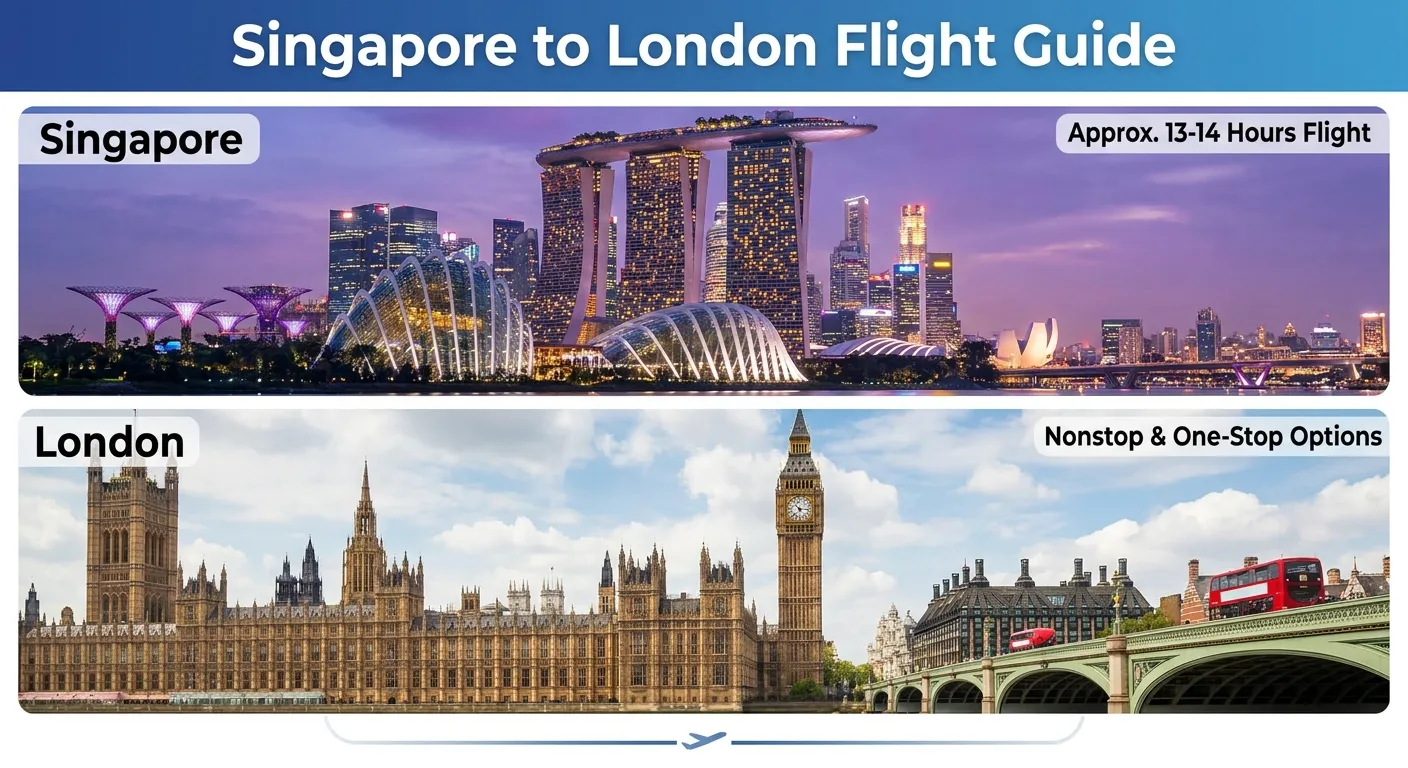
  • Singapore to London Flight Guide for 2026

    Singapore to London Flight Guide for 2026

    Singapore and London sit about 10,900 km apart, and a nonstop flight covers that distance in roughly 13 to 14 hours. This Singapore to London flight guide is for anyone booking the trip in late 2026 or early 2027.

    It covers which airlines fly nonstop, how long the flight takes, and when fares tend to drop. You will also find the UK entry rules for Singaporeans and the cheapest ways into central London. We checked every price and schedule in October 2026, so confirm the details again before you pay.

    Three airlines fly nonstop from Singapore to London: Singapore Airlines, British Airways, and Qantas. The flight takes about 13 to 14 hours, and most planes leave Changi in the morning or near midnight. Singapore citizens also need a UK travel permit called an ETA, which costs about S35in2026.EconomyreturnfaresaveragedaboutS944 in February, the cheapest month in Kayak’s data.

    Direct flights from Singapore to London in 2026

    Singapore Airlines, British Airways, and Qantas are the only carriers that fly nonstop between Changi Airport and London this year. The national airline runs the most flights, with four a day to Heathrow and a growing service to Gatwick. British Airways flies twice a day to Heathrow, and Qantas flies once a day on its Sydney to London route through Singapore.

    The table below lists each nonstop option, based on airline schedules published for 2026:

    AirlineLondon airportFlights from Singapore
    Singapore AirlinesHeathrow (LHR)4 daily
    Singapore AirlinesGatwick (LGW)10 weekly, 14 weekly from 25 Oct 2026
    British AirwaysHeathrow (LHR)2 daily
    QantasHeathrow (LHR)1 daily

    In London, Singapore Airlines uses Heathrow Terminal 2 and the Gatwick North Terminal, while British Airways lands at Terminal 5. Qantas flights arrive at Heathrow Terminal 3.

    Every Singapore to London flight guide should mention that Gatwick can be the cheaper airport. Kayak found a return fare of S$763 to Gatwick, the lowest of any London airport in its route data. The Gatwick flights use the Airbus A350, while two of the daily Heathrow flights still use the double-deck Airbus A380.

    At Changi, British Airways and Qantas check in at Terminal 1, and Singapore Airlines usually leaves from Terminal 3. Check your e-ticket a day before you fly, because the airport can move a flight to a new terminal. If you want the widest choice of times, pick the national airline. It runs five or six London flights on most days.

    One-stop flights add a few hours to the trip, but they can save you real money. Finnair connects through Helsinki, and its quickest option takes about 16 hours 45 minutes including the stop. Cathay Pacific routes through Hong Kong in about 18 hours 45 minutes from gate to gate. Booking sites often list China Southern and China Eastern as the lowest fares, with a stop in mainland China.

    How to plan your trip with this Singapore to London flight guide

    Good planning comes down to five choices: flight time, booking date, papers, arrival airport, and sleep. The parts below take each one in turn, so you can use this Singapore to London flight guide as a simple plan. Start with the flight time, since it shapes almost every other choice you make. Each part gives you the real numbers you need to make that choice today.

    Singapore to London flight time and time difference

    A nonstop Singapore to London flight time runs from about 13 hours 55 minutes to 14 hours 30 minutes. The exact time depends on the airline, the plane, and the winds on the day you fly. Flights back to Singapore are often shorter, at around 12 hours 40 minutes to 13 hours 25 minutes. Planes heading east get a push from the jet stream.

    London runs 7 hours behind Singapore while the UK is on British Summer Time. From 25 October 2026, when UK clocks go back, the gap grows to 8 hours until late March. That is why flights that leave Changi near midnight land in London around breakfast time. British Airways flight BA12, for example, leaves at 11:25 pm and reaches Heathrow Terminal 5 at 6:35 am. So if you leave on a Monday night, you land in London early on Tuesday morning.

    When to book cheap flights from Singapore to London

    The cheapest month for this route is usually February, when Kayak recorded an average economy return of S$944. Cheapflights data points to July as the most costly month, which lines up with school holidays in Europe. Booking sites do not fully agree, so treat these months as a guide rather than a firm rule.

    The day you fly matters a little too, though far less than the month you pick. Kayak’s Singapore data shows Saturday as the priciest day of the week to fly out. Set a fare alert on two or three booking sites, then watch prices for a few weeks before you pay. Book with the airline itself when you can, because changes are easier to sort out than through an agent.

    If you collect KrisFlyer miles, check the Gatwick flights before you look at Heathrow. The frequent flyer blog Mainly Miles says the Gatwick route may have better Business Class award space than Heathrow.

    UK ETA for Singaporeans and other travelers

    Singapore passport holders can visit the UK without a visa, but they must hold an Electronic Travel Authorisation (ETA) before they board. The fee rose to about S$35 on 8 April 2026, and one approval covers many visits over two years. You can apply through the official app or website in five short steps:

    1. Download the official UK ETA app, or open the ETA page on GOV.UK.
    2. Scan the chip in your passport and take a photo of your face.
    3. Answer the questions about your trip and any criminal convictions.
    4. Pay the fee of about S$35 with a debit or credit card.
    5. Wait for the decision by email, which usually arrives within minutes.

    Every traveler needs their own ETA, and that includes babies and young children. Skip third-party agents, since some charge two to three times the official fee for the same form. Apply at least three working days before you fly, in case your form needs a manual check.

    Getting from Heathrow or Gatwick to central London

    The cheapest way from Heathrow to central London is the Piccadilly line, and the fastest is the Heathrow Express. All three rail options take contactless cards and phone wallets, so you never need a paper ticket. Based on one-way fares from March 2026, the Piccadilly line costs about S$10 and takes 50 to 60 minutes.

    The Elizabeth line costs about S27andreachescentralLondonin30to35minutes.TheHeathrowExpresscostsaboutS43 for a standard ticket and gets to Paddington in 15 minutes. A black cab runs about S105toS175, depending on traffic and where you stay.

    For most people, the Elizabeth line gives the best mix of price and speed. It runs straight under the city, so you can often skip a change at Paddington. The Piccadilly line suits budget travelers with light bags, though the ride takes close to an hour. It also runs all night on Fridays and Saturdays, which helps if your flight lands late.

    Gatwick sits about 40 km south of the city, and the Gatwick Express reaches London Victoria in about 30 minutes. A good Singapore to London flight guide reminds you to plan this last leg. A cab after a 14-hour flight costs much more than most people expect.

    How to sleep on the flight and beat jet lag

    Most overnight flights land between 5 am and 7 am. The goal is to sleep on board, then stay awake until evening. These habits help on a 14-hour flight:

    • Pick a flight near midnight if you want to land in the morning.
    • Set your watch and phone to London time as soon as you board.
    • Skip the first meal if it falls during London’s night hours.
    • Drink water every hour and keep alcohol to one drink.
    • Choose a window seat so seatmates do not wake you.
    • Spend your first afternoon outdoors, since daylight resets your body clock.

    The national airline also runs a morning flight from Changi that lands at Heathrow in the afternoon. That timing suits people who cannot sleep on planes, because you go to bed at a normal London hour. Either way, try to stay awake until 9 pm on your first night, even if you feel tired by lunch.

    Singapore to London flight guide checklist before you fly

    Run through this list two days before you leave home for Changi. A missing paper causes far more stress at the check-in desk than a heavy bag does:

    • Passport valid for your whole stay, linked to an approved UK ETA.
    • Return or onward ticket saved offline on your phone.
    • London hotel address, written down for the airline and border officer.
    • Contactless bank card or phone wallet for the Tube and buses.
    • Travel insurance policy number and the insurer’s 24-hour helpline.
    • A warm jacket in your carry-on for cold London mornings.
    • Any medicine you take, in its first box, with a copy of your doctor’s note.

    You can leave the plug adapter at home, because Singapore and the UK both use the three-pin Type G socket. Singapore citizens can also use the eGates at Heathrow and Gatwick, which tend to move faster than the staffed desks. Families with young children should join the staffed lanes, since the gates have age limits. Keep a screenshot of your ETA email too, in case the airline system is slow at the desk.

    Frequently asked questions

    Which airline is best for a Singapore to London flight?

    Our pick in this Singapore to London flight guide is Singapore Airlines, because it has the most daily flights and serves both Heathrow and Gatwick. British Airways suits oneworld members who want to earn Avios on the trip. Qantas works well for travelers already flying from Australia through Singapore. Fares on all three often sit close together, so the schedule you prefer usually decides it.

    How far is London from Singapore by plane?

    The flight distance from Singapore to London is about 10,855 km, or roughly 6,750 miles. That makes it one of the longest nonstop routes you can fly from Changi Airport. For scale, Singapore to Sydney is about 6,300 km, so the London flight covers close to double that. Plan for a full day of travel once you add check-in and the ride into town.

    Do Singapore residents on other passports need a UK visa?

    It depends on your passport, not on where you live. Singapore permanent residents and Employment Pass holders follow the rules for the country that issued their passport. Malaysian, Australian, and American citizens need an ETA, just like Singaporeans do. Indian, Chinese, and Filipino citizens need a Standard Visitor visa instead. Check the GOV.UK visa tool with your exact passport before you book.

    Does Singapore Airlines fly the A380 to London?

    Yes, the airline runs two daily Airbus A380 flights between Changi and Heathrow. The other two Heathrow flights use the Boeing 777-300ER, and on the A380, Business Class sits on the upper deck. The Gatwick service uses the smaller Airbus A350, which has 253 seats across Business, Premium Economy, and Economy.

    What changes should travelers watch for after October 2026?

    Watch for three changes that take effect from late October 2026 onward. Singapore Airlines moves its Gatwick service to twice daily from 25 October, and UK clocks go back that same day. The ETA fee has risen twice since 2025, so check GOV.UK before you apply. We update this Singapore to London flight guide whenever schedules or fees change.

    Conclusion

    The best Singapore to London flight for most people is a late-night nonstop on Singapore Airlines or British Airways. You land around breakfast, clear the eGates, and reach central London by mid-morning on the Elizabeth line.

    Use this Singapore to London flight guide to lock in three things: the ETA, the arrival airport, and a fare alert. Those three cost the most when people miss them. Your next step is to apply for your ETA on GOV.UK today, at about S$35. Then set a fare alert for February if your dates can move, and bookmark this Singapore to London flight guide for updates.

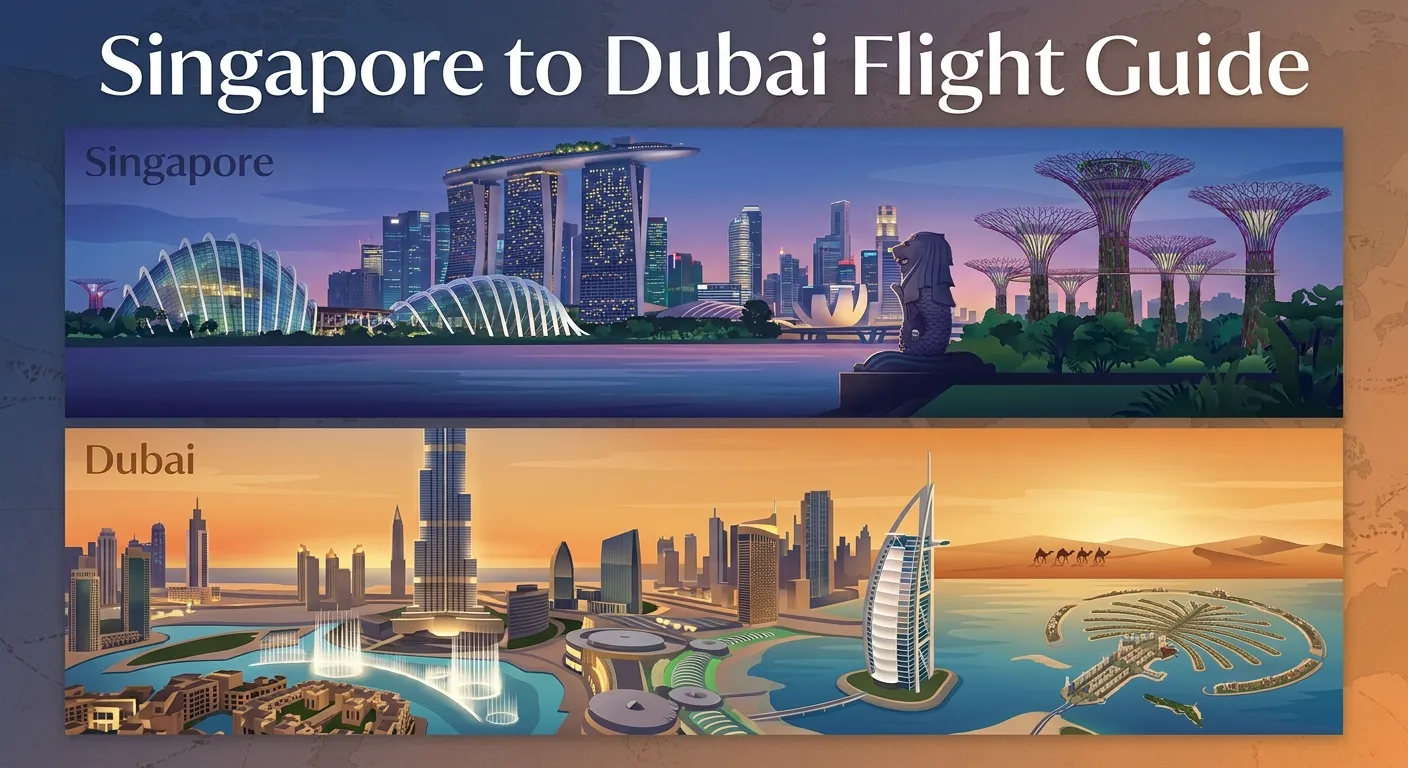
  • Singapore to Dubai Flight Guide for 2026

    Singapore to Dubai Flight Guide for 2026

    A Singapore to Dubai flight takes a little over seven hours nonstop and covers about 5,840 km. Two airlines fly the route without a stop, Emirates and Singapore Airlines. Between them, they offer around five nonstop departures a day from Changi Airport to Dubai International Airport (DXB).

    This guide covers flight times, the time difference, both nonstop airlines, and cheaper one-stop routes. You’ll also find fares in Singapore dollars, the best months to visit, and the UAE entry rules. All prices and schedules reflect what we found in October 2026, so check them again before you book.

    In short, a nonstop Singapore to Dubai flight spends about 7 hours 10 minutes to 7 hours 30 minutes in the air. Emirates flies it about four times a day, and Singapore Airlines flies it once a day. Singapore passport holders get free entry to the UAE on arrival, so they don’t need a visa in advance.

    Singapore to Dubai Flight Time and Distance

    Expect around 7 hours 10 minutes of real flying time on a nonstop Singapore to Dubai flight. Timetables often show closer to 8 hours to cover taxiing and headwinds over the Bay of Bengal. Route data from Kupi puts the distance between the two airports at 5,837 km.

    The trip home is often a little quicker. Emirates lists its Dubai to Singapore service at about 7 hours 16 minutes in the air, as planes heading east catch a tailwind. On either leg, your actual time in the air can shift by 10 to 20 minutes with the weather.

    Dubai runs 4 hours behind Singapore all year, because neither country uses daylight saving time. The gap is small, so most people feel only mild jet lag. Leave Changi at 9:00 pm, and you will land in Dubai at around midnight local time.

    Most departures from Changi leave in the evening or late at night. That timing suits people who want to sleep on board and start their Dubai stay early the next day. Light sleepers may prefer a daytime flight, landing in the evening with time to go straight to bed.

    Seven hours is long enough for two meals on the nonstop airlines. Both carriers include a hot meal, drinks, and seatback films in economy. Halal meals are standard on Emirates, and you can request special meals from either airline at least 24 hours before departure. A neck pillow and a bottle of water help on the long night flight.

    Airlines, Fares, and Booking Tips for Flights from Singapore to Dubai

    Only two airlines offer direct flights from Singapore to Dubai, but several others connect through Gulf and Asian hubs at lower prices. The table below lists the nonstop choices first, followed by the main one-stop airlines on this route.

    AirlineRoute typeFrequency
    EmiratesNonstopAbout 28 flights a week
    Singapore AirlinesNonstopAbout 7 flights a week
    Qatar AirwaysOne stop in DohaDaily
    Oman AirOne stop in MuscatSeveral a week
    SriLankan AirlinesOne stop in ColomboDaily

    Emirates and Singapore Airlines Nonstop Flights

    Emirates runs most of the traffic on this route, with around 28 nonstop flights a week from Changi to DXB. That figure comes from Expedia’s Emirates route page, and it works out to about four departures a day. With that many choices, you can usually find a time that fits your plans.

    Emirates lands at its own Terminal 3 in Dubai, which helps if you are flying on to Europe or Africa. Its large network also means you can book Singapore to Dubai as the first leg of a longer trip on one ticket.

    Singapore Airlines flies the route once a day, and both airlines mostly use the Boeing 777 on this sector. Economy seats feel much the same on both airlines, with similar space and screens. Singapore Airlines suits KrisFlyer members who want to earn or spend miles on their trip to the Gulf.

    Fares on the two nonstop airlines often land in a similar range for the same dates. Compare their baggage rules, seat selection charges, and departure times, rather than looking only at the headline price.

    One-Stop Flights That Cost Less

    Not everyone needs the fastest Singapore to Dubai flight, and plenty of travelers happily add a stop to save money.

    If price matters more than speed, a one-stop route can save you a fair amount of money. These are the main one-stop choices from Changi:

    • Qatar Airways, connecting through Doha
    • Oman Air, connecting through Muscat
    • SriLankan Airlines, connecting through Colombo
    • Malaysia Airlines, connecting through Kuala Lumpur
    • IndiGo and other Indian airlines, connecting through cities in India

    A one-stop trip usually takes 10 to 14 hours in total, depending on the length of the layover. Some connections in Doha or Muscat are as short as 90 minutes, which keeps the full trip quite short. Always book the whole route on one ticket, so the airline rebooks you if your first flight runs late.

    Most transit passengers who stay airside in Doha or Muscat don’t need a visa for that stop. Rules differ by passport, though, so check with your airline if you hold a passport from outside Singapore.

    Ticket Prices and When to Book

    Over the past year, travel sites listed one-way fares from about SGD 300 on this route, mostly on one-stop trips. Nonstop round trips on Emirates started from around SGD 690 during the same period. Those are the lowest prices seen, so expect to pay more during the busy months.

    July is usually the cheapest month to fly from Singapore to Dubai, with June and August also running low. That is Dubai’s hottest season, so fewer tourists travel and airlines cut fares to fill their seats. December, the Chinese New Year period, and Singapore school holidays all push prices up.

    Booking about six to eight weeks ahead usually gives you a good mix of price and seat choice. Set a fare alert on Google Flights or Skyscanner for SIN to DXB, and watch it for a few weeks. Tuesday and Wednesday flights are often a little cheaper than Friday or Sunday ones. Also check both nonstop airlines directly, as they sometimes run sales that never show up on search sites.

    The cheapest economy fares on both airlines can come with limits on bags, seat choice, and changes. Planning a big shopping trip in Dubai? A fare with a larger bag allowance may cost less than paying for extra weight at the airport.

    Best Months to Fly to Dubai

    November to March is the most comfortable time of year to visit Dubai. Daytime temperatures usually sit between 20°C and 30°C, which makes the beach, the desert, and the old souks pleasant. It is also peak season, so hotels and flights cost more.

    The Dubai Shopping Festival usually runs from December into January and brings big crowds to the city. Go then for mall discounts, late-night markets, and fireworks over the creek. For quieter streets and lower hotel rates, look at late March or early November instead.

    From June to September, temperatures often pass 40°C, and the humidity feels heavy near the coast. Hotels drop their rates sharply in these months, and most attractions sit indoors. A summer Singapore to Dubai flight can still give you a good value trip.

    Ramadan moves about 11 days earlier each year, and in 2027 it falls mostly in February and March. Restaurants still serve visitors during the day, but eating and drinking in public places is frowned upon until sunset. Evenings during Ramadan are lively, with special iftar meals across the city.

    UAE Visa and Arrival at DXB

    Singapore passport holders get a free visa on arrival in the UAE, valid for 30 days and extendable for 30 more. The UAE Embassy in Singapore confirms this on its official visa page. Your passport should have at least six months of validity left on the day you land.

    People living in Singapore on other passports may need a UAE visa before they fly. Emirates and many Dubai hotels can sponsor a tourist visa for eligible travelers, so check your own rules early.

    Bringing prescription medicine? Carry the original prescription or a letter from your doctor. Visitors can bring up to three months’ supply for personal use. Some common medicines are controlled in the UAE, so check the list before you pack your bag.

    Arriving at DXB is quick once you know the order of things. Here is what happens after you land:

    1. Follow the signs to passport control for visitors.
    2. Show your Singapore passport and get your free 30-day entry stamp.
    3. Collect your bags and walk through customs.
    4. Buy a tourist SIM from du or e& in the arrivals hall if you need data.
    5. Take the Metro Red Line, a taxi, or a ride-hailing car to your hotel.

    Checklist Before Your Singapore to Dubai Flight

    Run through these points a few days before you leave for Changi. They will save you stress at the airport and when you land in Dubai.

    • Check that your passport has at least six months of validity left.
    • Confirm your Changi terminal, since Emirates and Singapore Airlines use different ones.
    • Carry prescriptions for any medicine you bring into the UAE.
    • Pack light, breathable clothes plus one modest outfit for mosques and older areas.
    • Bring a light jacket, as Dubai malls and the Metro run strong air conditioning.
    • Buy a Nol card at the airport Metro station for trains and buses in Dubai.
    • Get some UAE dirhams or a travel card with low foreign exchange fees.
    • Save your hotel address in Arabic and English for taxi drivers.

    Frequently Asked Questions

    Is there a direct flight from Singapore to Dubai?

    Yes, Emirates and Singapore Airlines both fly nonstop from Changi to Dubai International. Together, they run about 35 nonstop flights a week, and Emirates operates most of them.

    Which is cheaper, Emirates or Singapore Airlines?

    Neither airline is always cheaper, because fares change with the date and demand. Compare both on the same dates, and check what each fare includes for bags and seats.

    Do Singaporeans need a visa for Dubai?

    No advance visa is needed for a holiday in Dubai. Singapore passport holders get a free 30-day visa on arrival, which can be extended for another 30 days.

    How do I get from Dubai Airport to the city?

    The Dubai Metro Red Line stops at Terminals 1 and 3 and reaches Downtown Dubai in about 30 minutes. Taxis and ride-hailing apps are also easy to find outside both terminals.

    Can I fly from Singapore to Dubai with a stopover?

    Yes, many travelers connect through Doha, Muscat, Colombo, or Kuala Lumpur to save money. A one-stop trip usually adds 3 to 7 hours compared with a nonstop Singapore to Dubai flight.

    Planning Your Singapore to Dubai Flight

    The nonstop route between Changi and DXB is easy to book, with several daily choices on Emirates and one daily flight on Singapore Airlines. On a tight budget, a one-stop ticket through Doha or Muscat can cut the fare. You just need to be fine with a longer travel day.

    Dubai is easy for first-time visitors, with clean trains and lots of halal food. Pick your travel month first, because it shapes both the weather and the price you pay. A cool winter week costs more, while a hot summer week can save you a lot. Then set a fare alert and confirm your entry rules. Book your Singapore to Dubai flight once you see a price that suits your plans.

  • Singapore to Sydney Flight Guide for 2026

    Singapore to Sydney Flight Guide for 2026

    A Singapore to Sydney flight covers about 6,300 km and takes close to eight hours nonstop. Four airlines fly direct from Changi Airport to Sydney Kingsford Smith Airport: Singapore Airlines, Qantas, Scoot, and British Airways. Between them, they run dozens of departures every week, so finding a seat is rarely the hard part.

    The harder part is picking the right fare and month, and having your entry papers ready before you reach the gate. This guide covers flight times, airlines, ticket prices, the best months to travel, and the Australian ETA. Prices and schedules reflect what we found in October 2026, so check them again before you pay.

    A nonstop Singapore to Sydney flight takes about 7 hours 45 minutes to 8 hours 5 minutes. Singapore Airlines, Qantas, Scoot, and British Airways all fly direct from SIN to SYD. In 2026, the lowest one-way fares started near SGD 210 on Scoot, and Singapore passport holders need an Australian ETA.

    Singapore to Sydney flight time and distance

    The flight time from Singapore to Sydney is about 7 hours 45 minutes on a nonstop service. Data from FlightsFrom puts the distance at 6,328 km, or roughly 3,930 miles. Your real time in the air can shift by 15 to 20 minutes, depending on winds and the routing air traffic control gives the crew.

    The return leg is slower. Flights from Sydney to Singapore usually take about 8 hours 35 minutes, because aircraft heading west fly into stronger headwinds. Keep this in mind if you plan a tight connection at Changi on the way home.

    Sydney sits ahead of Singapore on the clock, and the gap changes during the year. Sydney moves to daylight saving time on the first Sunday of October, which puts it 3 hours ahead until early April. For the rest of the year, the difference is 2 hours.

    Many departures leave Changi late in the evening and land in Sydney the next morning. A flight leaving at 8:00 pm Singapore time in November lands at around 6:45 am in Sydney. You lose most of a night’s sleep, so a window seat and an eye mask help more than you might think.

    Most flights on this route use wide-body jets with two aisles, such as the Boeing 787 that Scoot flies. The full-service airlines add seatback screens, power outlets, and a full meal service. On an overnight flight, pick an aisle seat if you plan to get up often, or a window seat if you want to sleep.

    Airlines, fares, and booking tips for Singapore to Sydney flights

    Four airlines run direct flights from Singapore to Sydney, and each one suits a different kind of traveler. The table below compares them on service type and how often each one flies nonstop.

    AirlineService typeNonstop flights
    Singapore AirlinesFull serviceSeveral a day
    QantasFull serviceAbout 15 a week
    ScootLow costAbout 18 a week
    British AirwaysFull serviceDaily (BA15)

    All four airlines land at T1, the international terminal at Sydney Airport. That keeps the arrival the same no matter which one you book. The real choice comes down to price, flight times, and what you want included.

    Full-service airlines on the route

    The national airline runs the most nonstop departures on this route, with several flights a day from Changi. Economy fares include meals, drinks, seatback films, and a checked bag on most fare types. Its earliest departure usually leaves around 12:45 am and lands in Sydney in time for breakfast.

    Qantas flies about 15 nonstop services a week between Changi and Sydney, based on Expedia route data. It makes sense if you collect Qantas Frequent Flyer points or need a domestic flight once you land. You can book through to Melbourne, Brisbane, or Cairns on one ticket.

    British Airways also flies this sector as part of BA15, its London to Sydney service. You can buy the Singapore leg on its own, and fares sometimes undercut the other full-service airlines. Bags on its cheapest economy fares can cost extra, so read the fare rules before you pay.

    Budget flights with Scoot

    Scoot is the low-cost airline of the Singapore Airlines group and the usual choice for cheap flights from Singapore to Sydney. It runs about 18 nonstop flights a week on Boeing 787 aircraft. The base fare covers your seat and a small cabin bag, and very little else.

    Scoot charges extra for most things that come free on the full-service airlines. Expect to pay separately for these:

    • Checked bags, which are cheaper when you add them online before the flight
    • Hot meals, snacks, and drinks served on board
    • Seat selection, including the extra legroom rows
    • Blankets, pillows, and inflight Wi-Fi

    Add these up before you compare prices. A low base fare can land close to a Singapore Airlines economy ticket once you include a 20 kg bag and two meals.

    Scoot works best for a solo traveler on a short trip with carry-on luggage only. For a family with suitcases, the full-service airlines often cost about the same once every extra is counted.

    Scoot also sells ScootPlus, a premium seat with more legroom, a meal, and a bigger baggage allowance. It can be a fair middle ground for tall travelers on an overnight flight.

    Ticket prices and when to book

    Expedia listed one-way fares from about SGD 210 and return fares from about SGD 390 on this route over the past year. Those are the lowest prices seen, mostly on Scoot sale fares. Full-service economy tickets usually cost more, and the gap grows in busy months.

    Booking six to ten weeks ahead tends to give the best balance of price and choice, according to fare tracking sites. Midweek departures on a Tuesday or Wednesday are often cheaper than Friday or Sunday flights, when weekend travelers fill the plane.

    Set a price alert on Google Flights or Skyscanner for the SIN to SYD route. Both full-service airlines run fare sales during the year. Signing up for their email lists is the easiest way to hear about them early.

    The cabin you pick changes the price of a Singapore to Sydney flight more than the date does. Business class on the full-service airlines often costs several times the economy fare. If you want more room for less money, premium economy sits in between and comes with a wider seat.

    Best time of year to fly

    The cheapest months for a Singapore to Sydney flight usually fall outside school holidays in both countries. February to May and late August to early November tend to be the quieter periods for fares and crowds.

    Fares climb in December and January, when Sydney has its summer holidays and the New Year’s Eve fireworks over the harbour. Singapore school holidays in June and from late November also push demand and prices up on this route.

    For weather, Sydney is mild from March to May and from September to November. Daytime highs sit around 20 to 25°C, which is good weather for the Bondi to Coogee coastal walk. Summer days often pass 30°C, and winter mornings in July can drop below 10°C.

    Vivid Sydney, the light festival held from late May to mid June, also pushes up hotel prices in the city. If you want to see it, book your flight and your room early.

    ETA visa and entry rules for Australia

    Singapore passport holders need an Electronic Travel Authority, subclass 601, before boarding any flight to Australia. There is no visa fee, only a small service charge, and the whole thing takes about 15 minutes on your phone. Here is how it works for Singapore to Sydney Flight:

    1. Download the official Australian ETA app from the App Store or Google Play.
    2. Scan the photo page of your passport and take a live selfie in the app.
    3. Answer the questions about your trip, health, and past travel.
    4. Pay the AUD 20 service charge, about SGD 17, by card.
    5. Wait for the approval email, which often arrives within minutes.

    The ETA stays valid for 12 months and allows several visits of up to three months each. It is run by the Department of Home Affairs, so skip third-party websites that charge extra for the same approval.

    People in Singapore with other passports, such as Indian or Nepali passports, usually need a Visitor visa, subclass 600. That application goes through ImmiAccount and can take several weeks, so start early. Australia also has strict biosecurity rules, so declare all food, plant, and animal products when you land.

    Checklist before your Singapore to Sydney flight

    A little preparation in the week before departure makes landing in Sydney much smoother. Run through these points before you leave for Changi.

    • Apply for your ETA or visitor visa at least a week before you fly.
    • Check your departure terminal at Changi, since airlines on this route use different ones.
    • Arrive at Changi two to three hours before your international departure time.
    • Pack a light jacket, because Sydney mornings feel cool after Singapore’s heat.
    • Keep packaged snacks easy to reach so you can declare them at biosecurity.
    • Use a contactless bank card or an Opal card to tap on Sydney trains.
    • Download offline maps of Sydney before you board, in case roaming is slow.

    At Sydney Airport, Singapore citizens with an electronic passport can usually use the SmartGate kiosks at passport control. These scan your passport and face, which is often quicker than the staffed desks. After that, you collect your bags, pass biosecurity, and walk out to the train or taxi rank.

    Frequently asked questions

    Which airline is cheapest from Singapore to Sydney?

    Scoot usually has the lowest base fares on this route, with one-way sale prices from about SGD 210 seen in 2026. Its base fare only covers a seat and a small cabin bag. Once you add a checked bag and meals, Singapore Airlines or Qantas can cost almost the same, so compare the full price.

    Is the Singapore to Sydney flight an overnight flight?

    Many departures are overnight. They leave Changi between about 8:00 pm and 1:00 am and land in Sydney early the next morning. Some full-service airlines also run daytime flights that arrive in the evening. Choose a daytime flight if you sleep badly on planes and want to reach your hotel ready for bed.

    Can I fly from Singapore to Sydney with a stopover?

    Yes, you can connect through cities such as Kuala Lumpur, Bali, Melbourne, or Brisbane. A connection adds 3 to 10 hours to the trip, depending on the layover. These routes are sometimes cheaper during peak season, but with so many nonstop options, a stopover rarely saves enough to be worth it.

    Can I get an Australian ETA when I land in Sydney?

    No, you cannot apply for an ETA at the border. Airlines check your ETA or visa at check-in in Singapore and will not let you board without one. Apply through the AustralianETA app before your trip. Most approvals arrive within minutes, but some take longer if extra checks are needed.

    How do I get from Sydney Airport to the city?

    The Airport Link train is the fastest option and reaches Central Station in about 13 minutes. Trains run from the international terminal every few minutes for most of the day. You can tap on with a contactless bank card. A taxi or rideshare to the city centre takes 20 to 40 minutes, depending on traffic.

    Planning your Singapore to Sydney flight

    The nonstop route between Changi and Sydney is one of the easiest long flights in the region, at just under eight hours. Pick Scoot for the lowest fare if you travel light. Choose Singapore Airlines, Qantas, or British Airways if you want bags, meals, and more flight times included.

    Book six to ten weeks ahead, avoid school holiday peaks, and get your ETA sorted before your Singapore to Sydney flight. Your next step is simple: set a fare alert for SIN to SYD today and compare the full price once you find dates that work.

    A few minutes of checking now can save you a good share of the fare. It also means you land in Sydney with your ETA ready, your bags paid for, and a clear plan for the train into town.

  • Complete Singapore to Mumbai Flight Guide for 2026

    Complete Singapore to Mumbai Flight Guide for 2026

    Mumbai is one of the easiest big Indian cities to reach from Changi. A Singapore to Mumbai flight gets you there in roughly five and a half hours. Three airlines fly it without stops, and the cheapest October 2026 returns started from around SGD 345. Below, you’ll find which airport you’ll land at, when fares dip, and how to reach South Mumbai by metro.

    Nonstop flights from Changi (SIN) to Mumbai’s main airport (BOM) take between 5 hours 10 minutes and 5 hours 50 minutes. You land about three hours later on the clock, since Mumbai sits 2.5 hours behind Singapore. Fares usually run lowest in August and September, right in the middle of the monsoon.

    Flight Time, Distance, and Mumbai’s Two Airports

    Planes cover roughly 3,900 km on this route, heading west over the Bay of Bengal and across southern India. Because the clock in Mumbai runs behind, the arrival time always looks shorter than the trip really is.

    Take IndiGo’s 7:40 pm departure from Changi as an example of how this works. It has touched down at 10:50 pm Mumbai time, after about 5 hours 40 minutes on board.

    For years, every nonstop Singapore to Mumbai flight landed at Terminal 2 of Chhatrapati Shivaji Maharaj International Airport. That’s starting to change. Mumbai’s second airport, Navi Mumbai International Airport (NMI), opened in December 2025 and began flights abroad in July 2026.

    From 1 October 2026, airlines started moving some of their overseas Mumbai flights to Navi Mumbai in phases. The new airport sits about 46 km from the old one, on the eastern side of the harbour. Look at the airport code on your ticket, BOM or NMI, before planning anything else. The shift is meant to free up space at the main airport while its older Terminal 1 is rebuilt.

    Airlines are expected to email or text passengers if a booking moves between the two airports. If your Singapore to Mumbai flight gets switched to Navi Mumbai, recheck your hotel transfer. The drive from NMI into South Mumbai takes much longer than the metro ride from BOM.

    Airlines Flying Nonstop and Typical Fares

    IndiGo and Singapore Airlines each run two flights a day on the route, and Air India adds one more. IndiGo, the largest airline in India, sells low-cost fares with paid extras. Singapore Airlines and Air India are full-service carriers, with meals and a checked bag in most economy tickets.

    Here’s how the cheapest nonstop return fares compared on Google Flights for dates in mid-October 2026. We converted the rupee prices at INR 75 to SGD 1:

    AirlineWeekly nonstop flightsCheapest return seen (Oct 2026)
    IndiGo14About SGD 345
    Air India7About SGD 590
    Singapore Airlines14About SGD 635

    On at least some of its Mumbai flights, IndiGo uses the narrow-body Airbus A321neo. These planes have no seatback screens, so load your phone or tablet with shows before leaving home. Expedia’s data shows Singapore Airlines landing on time about 92% of the time on this route, which is the best record of the three. If you’re heading over for a few days of meetings with only a backpack, IndiGo is usually the cheapest seat on the route.

    Picking a Departure Time That Works

    Unlike some routes to India, there are no nonstop red-eye flights from Singapore to Mumbai. Departures run from around breakfast time until about 8 pm, which keeps your options simple.

    Morning departures from Changi usually land in Mumbai around lunchtime, local time, after a smooth daytime flight. IndiGo’s late-morning flight, for example, has reached Mumbai at about 2 pm local time. That leaves the afternoon free to check in, rest, and stay off the roads before the evening rush. A midday arrival also leaves time for a same-day domestic hop to Goa or another Indian city.

    Evening departures suit people who want to finish work in Singapore first. The trade-off is a late landing, often close to 11 pm in Mumbai. By then, the airport metro has usually stopped for the night, so plan on a cab from the arrivals kerb.

    Coming back, Singapore Airlines has run departures from Mumbai between late morning and close to midnight. That range lets you choose between a full last day in the city or an early start home.

    Five Ways to Get Cheap Flights to Mumbai

    Mumbai fares follow two calendars, the monsoon and the festival season. Most of the savings on a Singapore to Mumbai flight come from reading both before you pick dates.

    1. Fly During the Monsoon Months

    August and September are usually the cheapest time to fly, because fewer tourists want rain on holiday. KAYAK puts August at an average return fare of about SGD 285, the lowest of the year. Rain is the price you pay, and storms can also hold up departures, so keep your first day light.

    2. Skip June and December If You Can

    June is one of the priciest months on this route, as Indian school holidays and early monsoon travel overlap. December is the other peak, with families flying home for weddings and year-end breaks. Shifting the trip by two or three weeks often brings the fare back down.

    3. Look at March for a Dry-Weather Deal

    Google Flights points to March as a cheap month, with fares well below the June peak. The weather is warm but still dry, so you get lower prices without the monsoon. It suits a first visit if you’d rather skip the heavy rain.

    4. Check Air India on More Than One Site

    During our check, Air India’s cheapest mid-October return was about SGD 590 on Google Flights but SGD 366 on KAYAK. A gap that wide usually comes down to small date or fare rule changes. Run the same search on two or three sites before you pay.

    5. Plan Around Ganesh Chaturthi and Diwali

    Ganesh Chaturthi, Mumbai’s biggest festival, runs for ten days around late August or September, and hotels near the big street parties sell out. Diwali, in October or November, is when Mumbai families living in Singapore travel home, which pushes fares up. Start tracking prices about three months before either festival to catch the lower fares.

    Mumbai Weather and the Monsoon Season

    Mumbai is warm all year, a lot like Singapore, but the monsoon changes the whole picture from June to September. Your travel month decides whether you spend the trip exploring or waiting out the rain.

    The monsoon usually arrives in early June and fades by late September, with the heaviest rain in July. Streets flood, trains slow down, and flights can face delays or diversions during the worst storms. If your Singapore to Mumbai flight lands during a downpour, give yourself extra time for the drive.

    October is hot and sticky once the rain stops, so it’s not the most pleasant month. November to February is the best time to visit, with dry days, clear skies, and cooler evenings by the sea. Hotel rates climb in those months too, so lock in your room early.

    March to May turns hot and humid again, with days in the mid-30s Celsius. It feels close to a Singapore afternoon, so most visitors from home cope well. Whatever month you pick, pack light cotton clothes and a small umbrella, since sea weather can turn fast.

    Indian e-Visa and Arrival Card for Singapore Passports

    India needs a visa from Singapore passport holders, though you never have to visit an office. Mumbai airport is one of the arrival points where India’s e-Visa is accepted. Work through this timeline before your Singapore to Mumbai flight:

    • Four or more days before travel: apply for the 30-day e-Tourist Visa on indianvisaonline.gov.in.
    • Fee: USD 25 for most of the year, or USD 10 for trips from April to June.
    • When you book: check your passport has six months left, and keep a return ticket handy.
    • In the 72 hours before landing: fill in the free e-Arrival Card, which replaced paper forms in April 2026.
    • On the day: carry your e-Visa approval and e-Arrival QR code on your phone.

    The 30-day e-Tourist Visa also allows two entries into India. That helps if you plan a side trip to Sri Lanka or Nepal before flying back in.

    Before You Fly From Changi

    As of our last check, IndiGo flies to Mumbai from Terminal 2, and Singapore Airlines and Air India use Terminal 2 or 3. The MRT drops you right under both of those terminals. If you arrive early and want a proper meal, Jewel is a short walk away through the link bridges.

    Aim to reach the check-in counters at least two hours before departure. The evening Singapore to Mumbai flight tends to fill with families carrying large suitcases, so queues can build up quickly.

    Getting From Mumbai Airport Into the City

    Terminal 2 has its own station on the Aqua Line, Mumbai’s first fully underground metro. It opened along its full length in October 2025 and runs from the airport all the way to South Mumbai:

    1. From arrivals at Terminal 2, follow the walkway to the metro station, about 100 metres away.
    2. Board a train heading south, in the direction of Cuffe Parade.
    3. Get off at BKC for the business district, or stay on for Churchgate and Cuffe Parade.
    4. Expect the full ride south to take 40 to 45 minutes and cost up to about INR 70.

    The line also stops at Dadar and CSMT, which connect to Mumbai’s suburban trains and long-distance rail.

    Trains run from early morning until about 10:30 pm, so check the time if you land late. The metro beats the road at rush hour. A taxi from the airport to Colaba can then take well over an hour. Cabs still make sense with heavy bags, a late landing, or a hotel in the suburbs.

    If your Singapore to Mumbai flight lands at Navi Mumbai instead, plan the ride in advance. The new airport has no direct metro to South Mumbai yet. Most people take a cab across the Atal Setu sea bridge, which crosses the harbour to the city.

    As a rough guide, SGD 10 buys about INR 750 at late-September 2026 rates. Cards work in most hotels, malls, and restaurants, but carry some cash for kaali-peeli taxis and street food stalls.

    Frequently Asked Questions

    How long is a Singapore to Mumbai flight?

    Expect between 5 hours 10 minutes and 5 hours 50 minutes in the air. Mumbai’s clock runs two and a half hours behind, so your arrival time looks about three hours after departure.

    Which Mumbai airport do flights from Singapore use?

    Most nonstop flights land at Chhatrapati Shivaji Maharaj International Airport (BOM), Terminal 2. Since October 2026, some overseas flights are moving to Navi Mumbai (NMI), so check the airport code on your ticket.

    Do Singaporeans need a visa for Mumbai?

    They do, but it’s an e-Visa you get online, and Mumbai airport accepts it. Apply at least four days ahead, then file the free e-Arrival Card in the 72 hours before landing.

    When are flights from Singapore to Mumbai cheapest?

    Fares usually bottom out in August and September, during the monsoon. KAYAK shows an August average of about SGD 285 for a return trip. June and December are usually the most expensive months for this route.

    How do I get from Mumbai airport to Colaba?

    Take the Aqua Line metro from the Terminal 2 station to Cuffe Parade, which takes about 40 to 45 minutes. A taxi works too, but traffic can make the drive much slower.

    Booking Your Singapore to Mumbai Flight

    Check the airport code first, because BOM and NMI lead to very different rides into the city. Then pick your month with the monsoon in mind, and run your dates on more than one booking site. With the e-Visa approved and the e-Arrival Card filed, all that’s left is the metro ride south.

  • Singapore to Delhi Flight Guide for 2026: Read Complete Article

    Singapore to Delhi Flight Guide for 2026: Read Complete Article

    A Singapore to Delhi flight takes about six hours, long enough for two films and a meal but short enough to skip the jet lag. Three airlines fly the route nonstop, and return fares in October 2026 started from around SGD 487. This guide covers the airlines, the prices, the visa rules, and the ride from Delhi airport into town.

    Nonstop flights from Singapore Changi (SIN) to Delhi’s Indira Gandhi International Airport (DEL) take about 5 hours 35 minutes to 6 hours 5 minutes. Air India, Singapore Airlines, and IndiGo run about 44 nonstop flights a week between them. Singapore passport holders need an Indian e-Visa before they fly, and you apply for it fully online.

    Flight Time, Distance, and the Time Difference

    The route covers roughly 4,150 km, heading northwest across the Bay of Bengal. Most nonstop services land in just under six hours, though winds can shave off or add 20 minutes.

    Delhi runs on India Standard Time, which is two and a half hours behind Singapore. That odd half-hour offset catches a lot of people out when they set alarms or plan calls home. One recent Singapore Airlines flight left Changi at 4:45 pm and landed in Delhi at 8:05 pm local time.

    Every nonstop Singapore to Delhi flight lands at Terminal 3 of Delhi airport. It’s the biggest terminal at India’s busiest airport, so expect a long walk from the gate to passport control.

    Airlines Flying Nonstop and What They Cost

    Air India flies the route most often, with about 23 nonstop flights a week. Singapore Airlines runs two daily flights, and IndiGo, India’s biggest airline and a low-cost carrier, has one daily evening service. Air India and Singapore Airlines are both Star Alliance members, which helps if you collect KrisFlyer miles.

    On Singapore Airlines and Air India, economy fares usually include a hot meal, with plenty of Indian vegetarian options. IndiGo sells food and drinks on board instead, so eat at Changi before you fly or pre-book a meal online.

    Here’s how the three compared for return trips on Google Flights in October 2026:

    AirlineWeekly nonstop flightsTypical return fare (Oct 2026)
    Air India23SGD 375 to SGD 860
    Singapore Airlines14SGD 720 to SGD 1,400
    IndiGo7SGD 365 to SGD 660

    The price gap here is bigger than on most routes of a similar length from Changi. A Singapore Airlines ticket can cost twice as much as IndiGo for the same six hours in the air. If comfort and a good meal matter, the full-service fare earns its price. For a cheap Singapore to Delhi flight with just a cabin bag, IndiGo is usually the one to beat.

    Older travel sites may still list Vistara on this route, but it merged into Air India in November 2024. Those former Vistara flights now run under the Air India name and booking system.

    Choosing Between Red-Eye, Day, and Evening Flights

    Departure times on this route vary more than people expect, and the time you pick shapes your first day in Delhi. Check the arrival time as closely as the fare before you book anything.

    Singapore Airlines has run a 2:35 am red-eye that lands in Delhi around 5:40 am. It suits travellers who sleep well on planes and want a full day on arrival. If you struggle to sleep sitting up, you’ll spend that first day half awake.

    Daytime departures, mostly on Air India, land around lunchtime or early afternoon. They’re the easiest option for families and first-time visitors, since you reach the hotel before dark.

    Evening flights need a little more thought, mostly because of the metro. A Singapore to Delhi flight that lands after 11 pm misses the last Airport Express train into the city. Budget for a taxi or an app cab, and book your hotel’s check-in time in advance.

    For the trip home, the same thinking about timing works in reverse. A late-night flight out of Delhi lands at Changi early the next morning, so plan a light day after you get back.

    How to Find Cheaper Flights to Delhi

    Fares on this route swing by hundreds of dollars between seasons. These five habits make the biggest difference for travellers leaving from Singapore.

    1. Fly in September or October

    KAYAK puts September as the cheapest month, with return fares averaging about SGD 384. Trip.com points to October, with an average of around SGD 365. Both months sit just before Delhi’s busy winter travel season begins in earnest.

    2. Avoid December and the Diwali Rush

    December is the priciest month on this route, with average return fares reaching about SGD 766 on Trip.com. Diwali, which falls in late October or November, also pushes prices up. Many Indian families in Singapore fly home for the festival, so seats fill early.

    3. Check What the Fare Includes

    IndiGo’s fares often look cheapest, but meals and extras can cost more. Before you book a budget Singapore to Delhi flight, add the bags and meals you actually need. Then compare that total with Air India, which usually includes a meal and checked bag.

    4. Look at One-Stop Flights When Nonstops Are Full

    During peak weeks, a one-stop route through Kuala Lumpur can cost less than the nonstop options. KAYAK showed one-stop return fares from about SGD 363 on this route. Malaysia Airlines and Batik Air both sell this kind of connection. The trip takes longer, often 10 hours or more, so it suits flexible travellers best.

    5. Set a Fare Alert Two to Three Months Ahead

    Track your dates on Google Flights or KAYAK, and book when the price drops near the low end of the table above. Prices often jump in the last two weeks before you fly, so a late booking is rarely a cheap one. For Diwali or December trips, start watching even earlier, ideally four months out.

    Best Time of Year to Visit Delhi

    Delhi’s weather is far more extreme than Singapore’s, so your travel month matters more than the fare alone. Each season brings its own trade-off for visitors from a city that stays warm all year.

    From April to June, Delhi gets very hot, and afternoons often pass 40°C. July to September brings the monsoon, with heavy rain and flooded roads on some days. These months tend to have lower fares, but sightseeing can be tiring.

    October to March is the most pleasant time to visit, with cool mornings and mild afternoons. The catch is air quality, which often drops sharply in late October and November. Pack a good mask if you have asthma or a sensitive chest.

    Winter also brings dense fog, mostly in December and January. Fog can delay early morning landings at Delhi by several hours. If your Singapore to Delhi flight lands at dawn in winter, leave a buffer before any connecting train or meeting.

    For many Singapore travellers, February and early March are the sweet spot. The fog has usually lifted, the air is clearer, and the summer heat has not yet arrived. Just watch for Holi in March, the spring festival of colours, which fills hotels and pushes up fares that week.

    Visa and Entry Rules for Singapore Travellers

    Singapore passport holders need a visa for India, but the process is fully online. The 30-day e-Tourist Visa costs USD 25, or USD 10 for travel between April and June. Before your Singapore to Delhi flight, check that you have these ready:

    • A passport valid for at least six months from the day you arrive in India.
    • An approved e-Tourist Visa from indianvisaonline.gov.in, applied for at least four days ahead.
    • A return or onward ticket, since airline staff may ask for it at check-in.
    • The e-Arrival Card, filed online within 72 hours before you land.

    The e-Arrival Card replaced the old paper landing form, which India stopped accepting on 1 April 2026. You can file it free on the Indian Visa Online portal or the Su-Swagatam app. Save the QR code to your phone, and print a copy as backup.

    Watch out for lookalike visa websites when you search for the application page. Several fake sites copy the government portal’s design and charge two or three times the real fee.

    Before You Fly From Changi

    Changi splits the three airlines across two terminals, so check your booking before you head out. As of our last check, flights to Delhi leave from these terminals:

    • Singapore Airlines departs from Terminal 3.
    • Air India departs from Terminal 2.
    • IndiGo departs from Terminal 2.

    The MRT stops directly beneath Terminals 2 and 3, so getting there is simple. For an international flight of this length, arrive about two and a half hours before departure. Changi screens bags at the gate, so keep liquids in your cabin bag under 100 ml each.

    Getting From Delhi Airport Into the City

    After a Singapore to Delhi flight, follow the signs for immigration and look for the counters marked for e-Visa holders. Queues can grow long when several international flights land together, so keep your passport and e-Arrival QR code in hand.

    Terminal 3 has its own metro station, which links straight to the Airport Express Line. For most travellers, it’s the fastest way into central Delhi:

    1. Follow the “Metro” signs from the arrivals hall to the Airport Express station.
    2. Buy a token or card at the counter, paying in rupees or by card.
    3. Pay a fare of under INR 100, less than SGD 1.50, for the ride to New Delhi station.
    4. Arrive at New Delhi station about 20 minutes later, close to Connaught Place.

    Prepaid taxi counters and app cabs wait outside arrivals as well. They’re easier with heavy bags or a late arrival. Delhi’s traffic, though, can stretch a 40-minute drive past an hour at rush hour. If you’re staying in Gurugram, a cab also makes more sense, since the metro needs at least one change of line.

    Most travellers also want mobile data from the moment they land in Delhi. A local SIM card at the airport needs your passport and visa, and activation can take a few hours. A travel eSIM bought in Singapore before you fly is often the simpler choice.

    For spending money, SGD 1 was worth about INR 75 on 30 September 2026, so SGD 100 gets you around INR 7,500. Airport money changers usually offer weaker rates than shops in the city. Change a small amount on arrival, then use an ATM or travel card once you’re settled.

    Frequently Asked Questions

    How long is a Singapore to Delhi flight?

    A nonstop flight takes about 5 hours 35 minutes to 6 hours 5 minutes. With the time difference, you land roughly three and a half hours later on the clock.

    Which airline is cheapest from Singapore to Delhi?

    IndiGo usually has the lowest nonstop fares, with typical return prices of SGD 365 to SGD 660 in October 2026. Add any bags and meals before you compare it with Air India.

    Do Singaporeans need a visa for India?

    Yes, Singapore passport holders need a visa, but the e-Tourist Visa is applied for fully online. The 30-day version costs USD 25, or USD 10 for April to June travel.

    What is the time difference between Singapore and Delhi?

    Delhi is two and a half hours behind Singapore all year. When it’s noon at Changi, it’s 9:30 am in Delhi.

    What is the cheapest month to fly to Delhi?

    September and October usually have the lowest return fares, averaging about SGD 365 to SGD 384. December tends to be the most expensive month on this route.

    Booking Your Singapore to Delhi Flight

    Pick your dates first, because the season moves the price far more than the airline does. Compare the three nonstop airlines with bags included, and watch the arrival time as closely as the fare. Once you’ve booked, apply for your e-Visa, then file the e-Arrival Card three days before you fly.

  • Singapore to Jakarta Flight Guide 2026 | Fares and Airlines

    Singapore to Jakarta Flight Guide 2026 | Fares and Airlines

    A Singapore to Jakarta flight takes about 1 hour 50 minutes, roughly the length of a film at Jewel. Eight airlines fly the route nonstop, and budget fares in September 2026 started under SGD 100 one way. This guide walks Singapore travellers through the airlines, the prices, the entry rules, and the ride from the airport into the city.

    Nonstop flights from Singapore Changi (SIN) to Jakarta Soekarno-Hatta (CGK) take about 1 hour 40 minutes to 2 hours. In September 2026, return fares averaged about SGD 201 on KAYAK. Singapore passport holders can stay in Indonesia for 30 days without a visa.

    Flight Time, Distance, and Airports

    The route covers about 880 km, which makes it one of the shortest overseas hops from Changi. Most nonstop services spend 1 hour 40 minutes to 2 hours in the air, depending on the airline and the winds.

    Jakarta runs on Western Indonesia Time (WIB), which is one hour behind Singapore, so the clock looks odd when you land. In one recent schedule, a Singapore Airlines flight left Changi at 9:05 am. It landed at 9:55 am Jakarta time, after nearly two hours in the air.

    Every nonstop Singapore to Jakarta flight lands at Soekarno-Hatta Airport (CGK), about 33 km west of the city centre. The city’s second airport, Halim (HLP), handles mostly local flights within Indonesia. A cheap fare that shows HLP as the arrival airport usually means a stop somewhere else first.

    You won’t struggle to find a seat at a time that suits you. Recent schedules show the first flight leaving around 6:20 am and the last around 11:20 pm, with dozens in between.

    Airlines on the Route and Typical Fares

    The eight nonstop airlines fall into two rough groups. Singapore Airlines, Garuda Indonesia, and Batik Air sell full-service tickets with more included. Scoot, Citilink, TransNusa, and Indonesia AirAsia keep the base fare low and charge for extras. Pelita Air, a state-owned airline from Indonesia, flies the route as well. Full-service fares usually include a checked bag and a meal, while budget fares often cover only a small cabin bag.

    Here’s what the lowest return fares looked like on Google Flights for each airline in September 2026:

    AirlineService styleLowest return fare seen (Sept 2026)
    Singapore AirlinesFull serviceSGD 365
    Garuda IndonesiaFull serviceSGD 351
    Batik AirFull serviceSGD 245
    TransNusaLow costSGD 244
    ScootLow costSGD 218
    CitilinkLow costSGD 208

    The gap between the cheapest and the priciest option is about SGD 150 on a return trip. For a weekend visit with only a backpack, a low-cost Singapore to Jakarta flight is hard to beat. For a work trip with a suitcase and a meeting on arrival, the full-service fare often makes more sense.

    One name you may still see on older travel sites is Jetstar Asia. The Singapore-based airline stopped flying on 31 July 2025, so any guide that still lists it is out of date.

    Picking the Right Departure Time

    The time of your Singapore to Jakarta flight shapes the whole trip, not just the fare. With flights from dawn to nearly midnight, it pays to match the schedule to your plans.

    Morning flights suit business travellers best. Leave Changi around 9 am, and you’ll land before 10 am local time with a full working day ahead. That’s often worth a few extra dollars over a cheaper afternoon seat.

    Evening flights work well if you want to leave straight after work on a Friday. Citilink, for example, has had a 9 pm departure that lands just before 10 pm Jakarta time. You’ll reach your hotel late, but you won’t need to take leave.

    Be careful with the latest departures. A Singapore to Jakarta flight leaving after 11 pm lands after midnight, when the airport train has stopped for the night. You’ll need a taxi or Grab car instead, so budget for that before you book the cheap late seat.

    Coming back, an evening flight lets you use your last day in full. Leave extra time for the drive to the airport, since Jakarta’s roads are at their worst between about 4 pm and 8 pm.

    How to Find Cheap Flights to Jakarta

    The cheapest fares come from good timing and reading the fine print. These five habits make the biggest difference for travellers leaving from Singapore.

    1. Aim for October or November

    According to KAYAK, October is the cheapest month for this route, with return fares averaging about SGD 156. Google Flights also points to November as a cheap month to fly. July tends to be the most expensive, since it falls in the middle of school holiday travel across the region.

    2. Fly Out on a Tuesday

    KAYAK’s data shows Tuesday as the cheapest day to fly from Singapore to Jakarta on average, and Friday as the priciest. Leaving on a Tuesday and flying back midweek can save you a fair amount over a Friday to Sunday trip.

    3. Add the Bags Before You Compare

    A low-cost fare that looks SGD 100 cheaper can shrink fast once you add a checked bag, a seat, and a meal. Before you pick a budget Singapore to Jakarta flight, add the extras you actually need. Then compare that total with the full-service price, which usually includes a checked bag.

    4. Plan Around Holiday Peaks

    Fares climb when Singapore school holidays begin, and again around Hari Raya Puasa. During that festival, many Indonesians working in Singapore fly home, and seats on the route fill quickly. If your dates can move, travel a week before or after these busy spells.

    5. Start Watching Fares Two to Three Months Ahead

    Booking sites like Traveloka suggest booking overseas flights about two to three months ahead. Set a fare alert on the dates you want, and book when the price drops close to the lows in the table above. For a trip during a holiday week, start looking even earlier.

    Weather and the Best Time to Visit Jakarta

    Jakarta is hot and humid all year, much like Singapore, so the weather rarely rules a trip out. The bigger factor is rain, which peaks in the wet season from around November to March.

    January and February usually bring the heaviest downpours. Flooding in some parts of the city can slow traffic badly on those days. If your trip means a lot of driving between meetings, the drier months from June to September are easier to plan around.

    If you book a Singapore to Jakarta flight in October or November for the lower fares, expect the start of the wet season. Showers tend to come in the afternoon, so plan outdoor visits for the morning. Pack a small umbrella either way, since a sudden storm can hit at any time of year.

    Entry Rules for Singapore Travellers

    Singapore passport holders can visit Indonesia for up to 30 days without a visa. The catch is that this visa-free stay can’t be extended, so plan your dates with care. Before your Singapore to Jakarta flight, make sure you have these ready:

    • A passport valid for at least six months from the day you arrive in Indonesia.
    • A return or onward ticket, since airline staff may ask to see it at check-in.
    • The All Indonesia Arrival Card, filled in at allindonesia.imigrasi.go.id within three days before you land.
    • A Visa on Arrival (IDR 500,000, about SGD 36) if you might stay past 30 days.

    The Visa on Arrival can be extended once, which the visa-free stay can’t. The arrival card replaced the older, separate customs and health forms. It takes about ten minutes to fill in, and you’ll get a QR code at the end. Save a screenshot, because mobile data can be patchy in the arrival hall. Queues at immigration can grow when several flights land together, so keep your passport and QR code in hand.

    Singapore residents on another country’s passport, such as PRs or work pass holders, follow the rules for their own nationality. Check the visa rules for your passport before you book anything.

    Before You Fly From Changi

    Changi splits these airlines across different terminals, and turning up at the wrong one is an easy mistake. As of our last check, flights to Jakarta leave from these terminals:

    • Scoot uses Terminal 1, with check-in at rows 5 to 7.
    • Singapore Airlines flies most Southeast Asia routes, including Jakarta, from Terminal 2.
    • Garuda Indonesia and Citilink use Terminal 3.
    • Batik Air has used both Terminal 3 and Terminal 4, so check your booking.

    The MRT stops right under Terminals 2 and 3, and Terminal 1 is a short walk or Skytrain ride away. Arrive about two hours before your flight. Scoot, for example, closes its check-in counters 60 minutes before departure.

    Changi screens bags at the gate rather than at the entrance, so give yourself a few minutes before boarding. Keep liquids in your cabin bag under 100 ml each, and have them ready to show.

    Getting From Soekarno-Hatta Into Jakarta

    Most overseas flights arrive at Terminal 3, though a few airlines still use Terminal 2. A free Skytrain links all the terminals with the airport rail station. From there, the airport train is the most reliable way into the city:

    1. Follow the signs for the Skytrain and ride it to the airport train station.
    2. Buy a ticket at the machine or in the app, paying by card or e-money.
    3. Pay about IDR 70,000 (roughly SGD 5) for a one-way ride.
    4. Get off at BNI City, about 45 to 50 minutes later, near Sudirman in central Jakarta.

    Taxis and Grab cars wait outside the arrival halls too, and Grab works with the same app you use at home. They’re easier with heavy bags, but Jakarta’s traffic can turn a 45-minute drive into two hours at rush hour. If you land between 4 pm and 8 pm on a weekday, the train is usually the smarter pick.

    For spending money, SGD 1 was worth about IDR 14,000 on 30 September 2026. That means SGD 50 gets you around IDR 700,000. Airport money changers tend to offer weaker rates. Change only a small amount there, and use a travel card or an ATM in the city.

    Frequently Asked Questions

    How long is a Singapore to Jakarta flight?

    A nonstop flight takes about 1 hour 40 minutes to 2 hours. Because Jakarta is one hour behind, you’ll land less than an hour after your departure time on the clock.

    Which airline is cheapest from Singapore to Jakarta?

    In September 2026, Citilink and TransNusa showed the lowest fares, with some one-way tickets under SGD 100. Add the cost of bags before you compare them with Singapore Airlines or Garuda Indonesia.

    Do Singaporeans need a visa for Jakarta?

    No, Singapore passport holders get 30 days without a visa for short visits. You still need to fill in the All Indonesia Arrival Card online within three days before you arrive.

    What is the time difference between Singapore and Jakarta?

    Jakarta is one hour behind Singapore all year, since neither city uses daylight saving time. When it’s 10 am at Changi, it’s 9 am in Jakarta.

    Is there a train from Jakarta airport to the city?

    Yes, the airport train runs from Soekarno-Hatta to BNI City in about 45 to 50 minutes. A one-way ticket costs about IDR 70,000, or roughly SGD 5, and trains stop running late at night.

    Booking Your Singapore to Jakarta Flight

    Start with the dates, because they move the price more than the airline does. Check fares for a Tuesday in October or November, add your bags, and compare the full cost across the table above. Once you’ve booked, fill in the All Indonesia Arrival Card three days before you fly. Then save the airport train details on your phone.