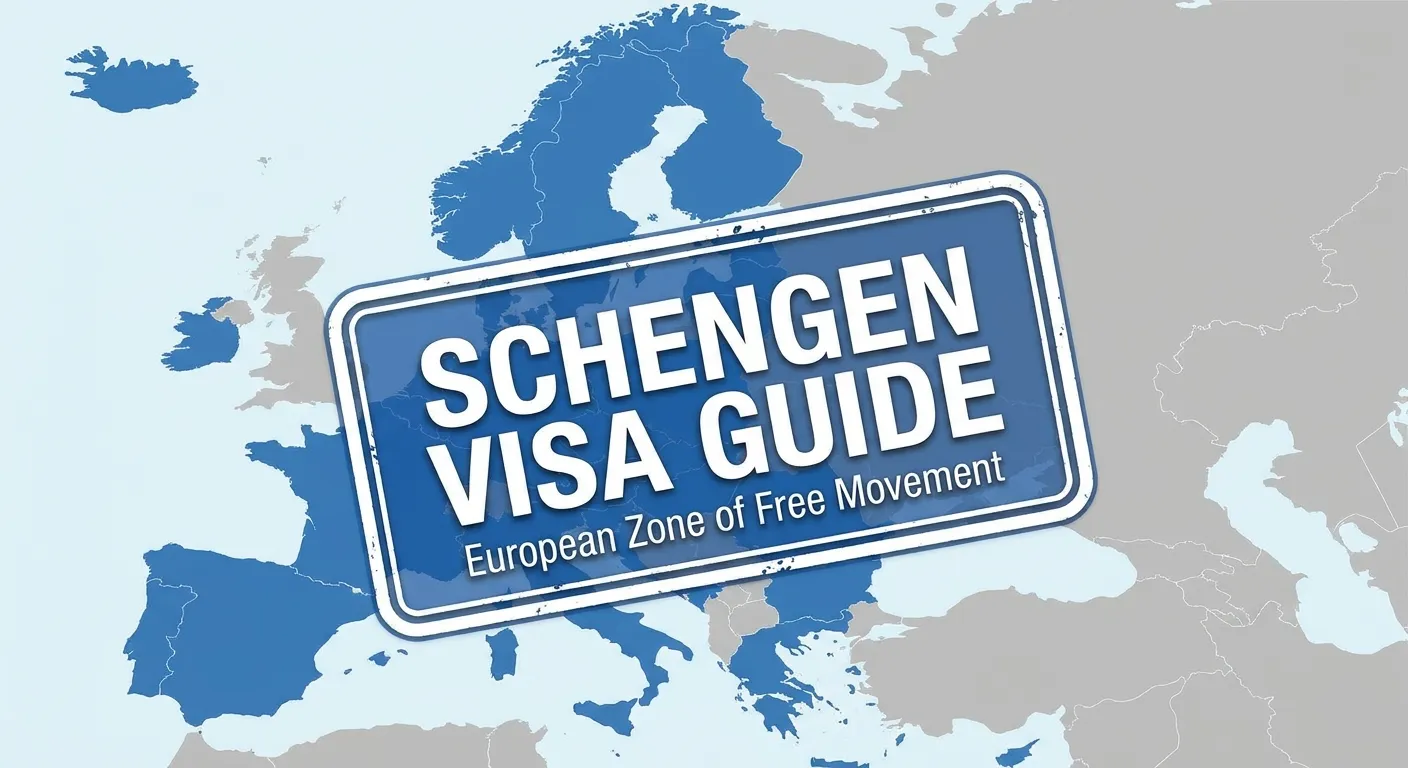
Singapore citizens can visit 29 European countries for up to 90 days in any 180 days without a visa. This Schengen Visa Guide is for Singaporeans, PRs, and pass holders planning a trip to Paris, Rome, Zurich, or anywhere else in the zone. It covers who needs a visa, how to apply from Singapore, the new fingerprint checks, and the travel permit that is still delayed.
You’ll also find the fees in euros and Singapore dollars, plus a short list to check before you fly. We read each rule on official EU sites in October 2026, and we link to them so you can check them yourself. Two changes matter this year: passport stamps have given way to fingerprint scans, and ETIAS now has no start date at all.
Singapore passport holders do not need a Schengen visa and can stay up to 90 days in any 180 days, with no fee. Residents on Indian, Chinese, Filipino, Indonesian, or Vietnamese passports must apply for a visa before they fly. The fee is €90 for adults, about S$133, and decisions usually take 15 calendar days.
Singaporeans Visit Schengen Visa-Free for 90 Days
The Schengen Area covers 25 EU countries plus Iceland, Liechtenstein, Norway, and Switzerland. Bulgaria and Romania are full members, but Ireland and Cyprus are not. Your 90 days are shared across all 29 countries, so a week in France and a week in Italy use 14 days of one allowance.
The count runs over a rolling window, so on any day of your trip you look back 180 days. Add up every day you spent in the zone, and count both your arrival day and your exit day. The European Commission’s short-stay calculator does the maths for you, and it is worth using before a long trip.
Your passport must stay valid for at least three months after the day you plan to leave. It must also have been issued within the last 10 years, counted from the date printed on the data page. Every Schengen Visa Guide should flag that second rule, because some older passports pass the expiry check but fail this one.
Schengen Visa Rules by Passport for Singapore Residents
The rule follows your passport, not your PR status, Employment Pass, or S Pass. The table covers the passports most common in Singapore, based on EU visa lists we checked in October 2026:
| Passport | Schengen Visa Needed | What to Know |
|---|---|---|
| Singapore, Malaysia, Brunei | No | 90 days in any 180 days |
| UK, US, Australia, Japan | No | 90 days in any 180 days |
| India | Yes | Apply in Singapore, from €90 |
| China, Philippines, Indonesia | Yes | Apply in Singapore, from €90 |
| Vietnam, Thailand, Myanmar | Yes | Apply in Singapore, from €90 |
| Bangladesh, Pakistan, Sri Lanka | Yes | Transit visa also needed to change planes |
Families often mix these rows, and that catches people out. A Singaporean husband walks through visa-free, while his wife on an Indian passport needs a visa for the same trip. This Schengen Visa Guide covers her steps next, since her paperwork sets the timeline for both of them.
How to Apply for a Schengen Visa in Singapore
You apply to the country where you will spend the most nights. If your nights are split evenly, apply to the country where you first enter. The European Commission’s visa page sets out these rules, and each embassy adds its own checklist.
Most embassies in Singapore use a visa centre such as VFS Global or TLScontact, and the steps look much the same at each one:
- Choose your main country, then open its embassy or visa centre website for Singapore.
- Fill in the online form and book the earliest appointment you can get.
- Gather your passport, photos, Singapore pass, bookings, bank statements, and insurance.
- Attend the appointment to hand in papers and give your fingerprints.
- Track your passport online, then collect it with the visa inside.
You can apply up to six months before you travel and no later than 15 days before. Most decisions arrive within 15 calendar days, but some take up to 45. We suggest applying at least eight weeks ahead for trips in June or December, when slots fill fast.
The visa fee is €90 for adults and €45 for children aged 6 to 11, while children under 6 pay nothing. The visa centre adds its own service charge on top, so expect the total to land closer to S$180 per adult.
Travel insurance must cover at least €30,000 in medical costs, including the cost of flying you home. It must work in every Schengen country for your whole stay. Many refusals come from policies that miss one of those details.
Pass holders should also bring their Singapore pass card and a letter from their employer. The letter should state your job, salary, and approved leave dates. Students can use a letter from their school, while self-employed residents can show their ACRA business profile and recent tax notices.
Indian passport holders often ask about the “cascade” rule that gives two-year and five-year visas. The EU’s own notice limits it to Indians living in India and applying there. Indian residents of Singapore follow the standard rules, which grant long visas more slowly.
EES Fingerprint Checks Replace Passport Stamps
The Entry/Exit System, or EES, went live on 12 October 2025 and became fully active on 10 April 2026. It applies to every non-EU visitor, including Singaporeans who need no visa. Officers now scan your passport, take a photo of your face, and record your fingerprints the first time you enter.
Children under 12 give a photo but no fingerprints. Your record then lasts three years, so later trips only need a quick face or finger check. If you refuse to give these details, you will be turned away at the border.
The system counts your days for you and flags overstays on its own. That makes the 90-day rule much harder to bend than in the stamp era. The EU’s Travel to Europe site explains the process, and some countries let you upload your details on its app up to 72 hours ahead.
Expect longer queues on your first entry, especially at busy hubs like Paris and Frankfurt. This part of any Schengen Visa Guide changes the fastest, so leave extra time for a tight train or flight connection.
ETIAS Travel Permit Has No Start Date
ETIAS is a €20 online permit that visa-free visitors, including Singaporeans, will need once it starts. It is not running yet. The EU’s official page now says only that it will announce the start date several months before launch.
Until mid-2026, the target was the last quarter of 2026. Schengen Visa Info reported that this wording vanished in July, and that no new date had appeared by 19 October 2026. A launch in 2027 now looks more likely.
Some websites already sell “ETIAS applications” for much more than €20. Do not pay them, since no real application exists today. Our team will update this Schengen Visa Guide on the day the EU sets a launch date.
Transit Visas and Side Trips Outside Schengen
Some passports need an airport transit visa just to change planes inside a Schengen airport. Bangladesh, Pakistan, Sri Lanka, Ghana, and Afghanistan are on the EU-wide list. Some countries add more passports to their own lists, so check your connecting airport before you book a cheap fare.
London, Dublin, and Cyprus sit outside Schengen and run their own rules. Singaporeans need a UK Electronic Travel Authorisation, which costs £20, about S$34, since 8 April 2026. Days spent in the UK do not count toward your 90 Schengen days.
Stay Limits, Overstays, and Visa Refusals
A Schengen visa does not give you more time than a visa-free visitor. Even a five-year multi-entry visa still caps each stay at 90 days in any 180. Overstays can lead to fines, removal, and entry bans, and each country sets its own penalty.
Plan long trips around the count. Someone who spends 60 days in Europe from March has only 30 days left until those spring days drop out of the 180-day window.
No Schengen Visa Guide can promise approval, but a complete file and honest answers give you the best chance. A refusal letter must give the reason, and you can appeal within the deadline it states. A fresh application with the problem fixed is often faster than an appeal. Common reasons include weak bank statements, missing insurance details, and no clear plan for the trip.
Schengen Visa Guide Checklist Before You Fly
Run through this list two weeks before you fly from Changi, then again the night before:
- Passport issued within 10 years and valid three months past your return date.
- Visa in your passport for every family member who needs one.
- Insurance certificate showing €30,000 cover, all Schengen states, and your exact dates.
- Return flight and hotel bookings saved offline on your phone.
- A day count from the short-stay calculator if you visited Europe this year.
- UK ETA or Irish visa sorted for any part of the route outside Schengen.
- Trip logged on MFA eRegister, so Singapore can reach you if things go wrong.
At about S$1.48 per euro in August 2026, €100 costs roughly S$148. If you run into trouble abroad, the MFA Duty Office answers at +65 6379 8800 at any hour.
Frequently Asked Questions
Do Singapore PRs need a Schengen visa?
It depends on the passport you hold, not on your PR status. A PR with a Malaysian or British passport goes visa-free, while a PR with an Indian or Chinese passport must apply. Our pick in this Schengen Visa Guide is to book your visa centre slot before you book flights.
Can I visit several countries on one Schengen visa?
Yes, one visa covers all 29 Schengen countries for the dates it shows. Apply to the country where you will spend the most nights. When your nights are split evenly, apply to the country where you first land.
Do Singaporeans need ETIAS in 2026?
No, because ETIAS has not started and is not taking applications. Singaporeans still enter with just a valid passport and the EES fingerprint check. Once ETIAS starts, it will cost €20 and must be approved before you fly.
How much money do I need to show for a Schengen visa?
Each country sets its own daily amount, so check your embassy’s checklist. Bank statements for the last three to six months are the usual proof. A steady balance looks stronger than a large deposit made just before you apply.
What changes should travellers watch for after October 2026?
The biggest one is an ETIAS launch date, which the EU says it will announce months in advance. Cyprus may also move closer to full membership, and visa centre fees can change. We will update this Schengen Visa Guide when any of these changes takes effect.
Conclusion
For Singapore citizens, Europe needs very little paperwork: a passport issued within 10 years and a first-time fingerprint scan. Residents on visa-required passports need a €90 visa from their main country, plus €30,000 insurance.
Use this Schengen Visa Guide to settle three things before you book: your passport dates, your visa slot, and your 90-day count. For a Gulf stopover on the way, read our UAE visa guide as well. Bookmark this Schengen Visa Guide too, because we update it whenever Europe changes a rule or fee.